
Catfish in the Tongariro River?

Tourist anglers persist on asking awkward questions. I suspect they get bored just winding in so many trophy Rainbow trout. After being asked recently, rather than annoy DOC again, we promised to post previous TRM reports and other opinions on catfish in Lake Taupo and DOC’s management policy.
Catfish in the Tongariro River?
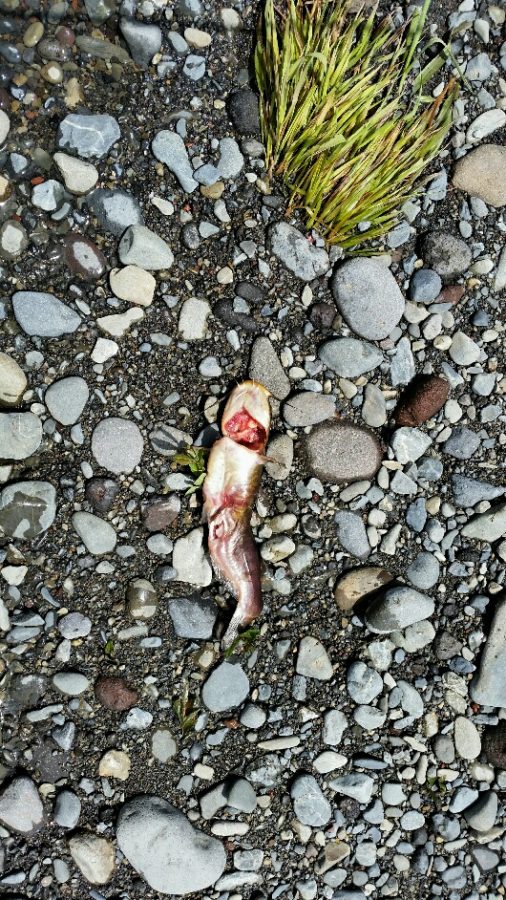
Grateful thanks to Shirley Fraser for her questions to DOC regarding a freshly killed catfish found on the banks of the Reed Pool, and thank you to Dave Conely for his reply….
Hi Shirley
I received your questions, and have provided some brief responses; hopefully, they answer your questions.
Looking at the pictures you provided, the fish appears to have had its gills eaten, probably by a gull or similar bird, so it could have been transported by a bird to the spot you found it?
Just a thought, but it is also possible the fish was living nearby.
1) Are there catfish living and breeding in the Tongariro River?
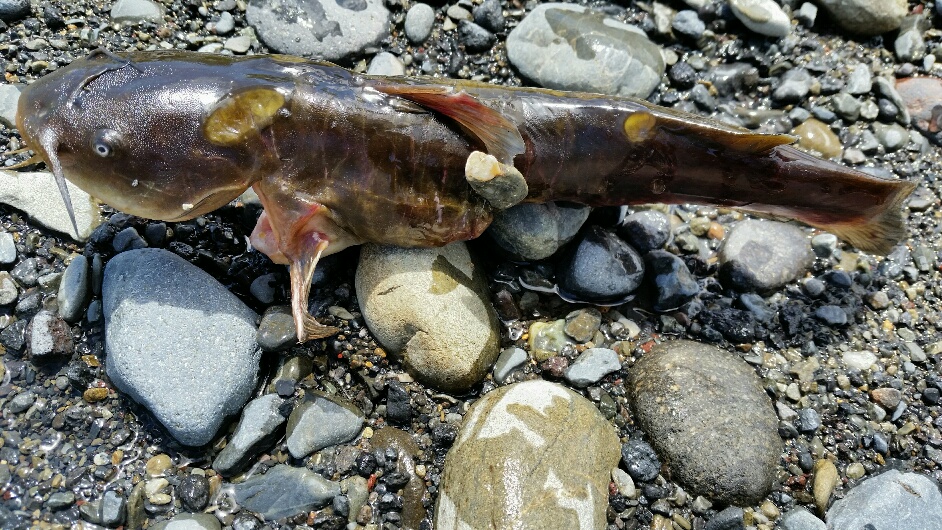
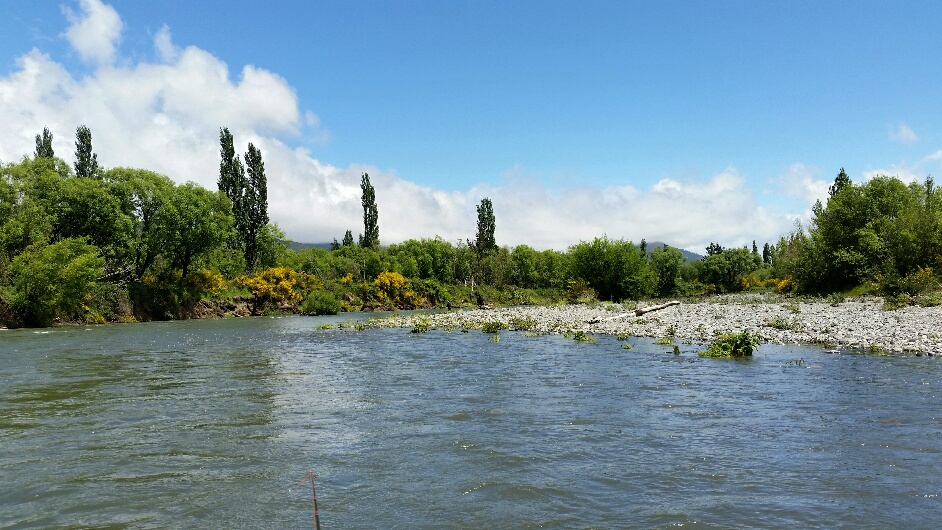
There are catfish known to live in the lower reaches of the Tongariro and other rivers around Lake Taupo.
They don’t breed in the river itself, as their preferred spawning habitat is in the warm shallow margins of the lake, particularly around raupo swamp.
2) Is DOC monitoring catfish in Taupo lake and rivers?
Yes, the department has been monitoring the catfish population in Lake Taupo for many years.
This monitoring is intended to help us understand the diet, population and distribution trends of the catfish.
3) If catfish are in the Tongariro River, what if anything can be done to control their spread?
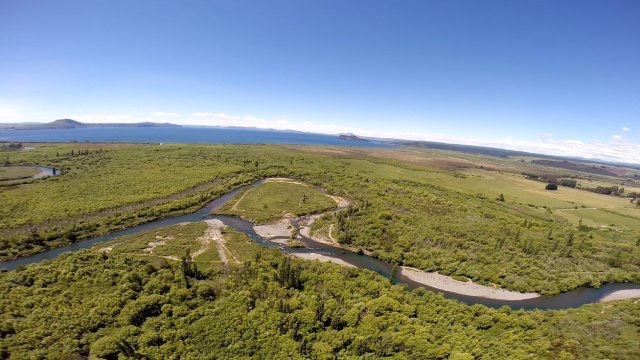
Catfish have been present in the lake for over 3 decades, and we expect that in this time they have reached the full extent of their likely range. Based on our monitoring the department has no concerns for the likelihood of catfish infesting the Tongariro, as its temperature and flow rate are generally outside the preferred habitat of catfish. The preferred habitat is warm water and shallow, sandy or muddy substrate and weed beds.
4) Has DOC got a catfish operational plan?
If by this question you mean to ask if the department has a plan for the eradication of catfish from the lake the answer is no. Our operations extend only to monitoring the catfish population and diet.
5) Does it include a program to counteract the damage they do to native fish populations?
No. The Ministry for Primary Industry has the responsibility for managing invasive species such as catfish, and there are no plans to undertake control programs in the lake at this time.
6) If they get abundant up the rivers how will this affect trout spawning? I read they love eating the trout eggs?
The department does not have any concerns in this regard, as per question 3 above.
7) Also, will the condition of the Taupo trout be affected with the competition for food from the catfish?
No. The department has monitored the diet of catfish for a number of years, and there is very little competition from catfish for the smelt, bullies and koura which are the preferred diet of trout.
The condition of trout in the lake is mainly dependent on the productivity of plankton in the pelagic zone of the lake, as plankton abundance underpins the entire food chain of the lake.
Regards
Dave
Dave Conley
Operations Manager Taupo Fishery
Turangi Office | Central North Island Region
G Level 1, 69 Town Centre, Turangi 3330
E 0211658663 or (07) 384 7116
Department of Conservation, Te Papa Atawhai www.doc.govt.nz
This was followed up with more info from previous reports as follows:
A fishy story…
Interesting provocative questioning email to TRM:
Hi Team, How is it that in Lake Taupo DOC claim MPI (Ministry for Primary Industry) has the responsibility for removing catfish whilst in the South Island they help Fish & Game to net pest fish?
Mixed messages or DOC in denial?
Does it include a program to counteract the damage they do to native fish populations?
DOC’s Answer:
No. The Ministry for Primary Industry has the responsibility for managing invasive species such as catfish, and there are no plans to undertake control programs in the lake at this time.

The concerned TRM inmate was so annoyed he had even done his homework and provided the following articles from “Target Taupo” (TT) – which used to be the excellent magazine for DOC to regularly communicate with anglers to update on all issues affecting the Taupo fishery:
1 TT December 2009 Issue 60 Page 28, headed “There is More in Lake Taupo than Trout” by John Webb:
In their list of introduced fish (other than trout) are Catfish. Quote” Catfish were first reported in Lake Taupo in 1985 and are now in stable numbers. Considered to be a pest fish, they inhabit quietly flowing weedy environments around sandy bottoms or lagoons…..” and goes on to say “DOC monitors catfish populations in Lake Taupo on a regular basis. Extensive research has also been done on their diet and spread dynamics.”
2 TT July 2008 Issue 58 Page 59 “Catfish in a goldfish bowl” by Mark Venman:
“This summer marked the 12th consecutive year of monitoring catfish in Lake Taupo.” and goes on for 3 pages to summarise the data to compare it to previous years to identify any trends – “almost 2,200 caught from 75 nets = 29.3 catfish per night per net.”.
3 TT August 2006 Issue 52 Page 44 – 47 “Hotspots for summer catfish” by Mark Venman:
“During summer 2005/06 we completed our tenth consecutive summer of monitoring catfish in Lake Taupo…. a total of 1693 were caught etc.”
4 TT March 2001 Issue 36 Pages 35-36. “Catfish numbers Appear Stable” by Rob Hood.

More info on monitoring programme. i.e. “Every second month three fyke nets are set at selected lake edge sites….” with graph showing catch rates back to 1997.
5 TT July 2000 Issue 34 Page 29 “Catfish Study Update”
“The acoustic tracking study of catfish in Lake Taupo is now completed. A total of more than 60,000 data records…. recorded from November 1998 to December 1999.”
etc…..
Readers can decide for themselves if the articles above are indicative of DOC’s management role?
The angler asked “How after many years of monitoring etc. how can they now claim: “The Ministry for Primary Industry has the responsibility for managing invasive species such as catfish”?
Others have different opinions on the catfish danger:
NIWA:
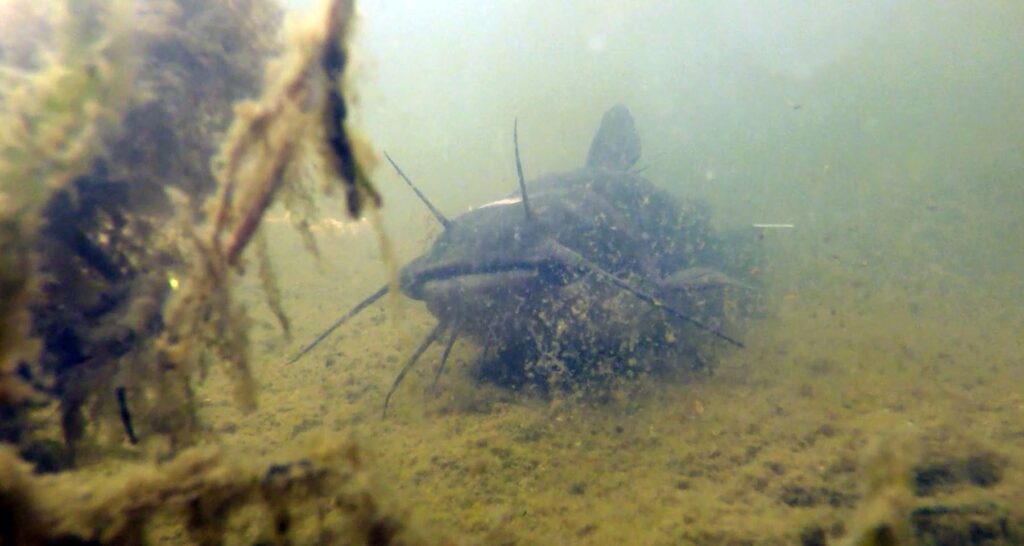
The catfish is not native to New Zealand and is the only member of the Ictaluridae family that occurs in New Zealand waters. The Ictaluridae, or North American catfish, is one of the smallest of more than 30 catfish families worldwide with about 45 species. Ictalurids are characterised by having barbels around the mouth – these look rather like whiskers and hence the common name catfish. However, in North America, where there are many species of catfish, the species found in New Zealand is known as the brown bullhead.
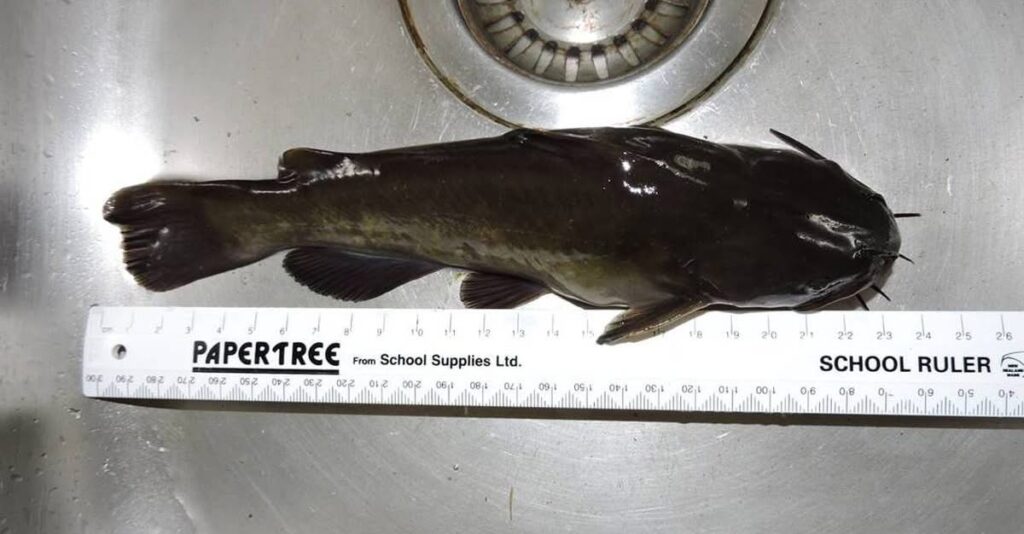
The brown bullhead catfish is dark brown to olive green colour with paler sides and bellies. In addition to the eight distinctive barbels around their mouth, catfish also have relatively small eyes and a smooth skin. The leading edge on their dorsal and pectoral fins has a sharp spine, and thus catfish should be handled very carefully to avoid injury from the spine. Catfish are an extremely robust fish and can survive for long periods out of water. They commonly grow to 200–300 mm in length.
Catfish have been present in New Zealand since the late 1800s. For many years, they were rarely encountered with the only known populations occurring in the lower Waikato River and in Lake Mahinapua south of Hokitika. They were first recorded from Lake Taupo in 1985. Since then, catfish have gradually spread throughout Lake Taupo and down the Waikato River. In 1997, catfish were recorded for the first time from the Kaituna Lagoon near Lake Ellesmere, and in 2003 from a stream entering Hokianga Harbour. Accidental introductions via boat trailers and especially fyke nets used for eeling is continuing to spread this species around New Zealand.
Catfish spawn in shallow depressions on the substrate in the shallows. The male guards and fans the eggs during development, and also guards the larvae for about a week after hatching. Catfish are carnivorous and use their sensitive barbels to probe the substrate and locate insects, crustaceans, molluscs and small fish. Freshwater crayfish are a major prey species for catfish in Lake Taupo.
AI
- Threat to Kōura: They feed on native freshwater crayfish (kōura), reducing native populations in shallow, weedy areas.
- Water Quality: They stir up bottom sediment and pull up aquatic plants while feeding, which can lower water clarity.
- Competition: They compete with other native fish and potentially local trout for food resources in shallow zones.
CATFISH IN LAKE TAUPO
Michel worked for the Department of Conservation as the science advisor in the management of Lake Taupo since 1992. Since the mid 1990’s trout anglers have been raising their concerns about the potential impacts of catfish in Lake Taupo that lead the monitoring and research of catfish.
To explain how DOC have been dealing with catfish in Lake Taupo and also the research that was done.
If you still need to know more, go to:
Last, the reason for the enquiry, the 2027 catfish cull has been cancelled.