
STAND UP!
Mission Statement. “We want Fish & Game to be able to administer the four step plan to the satisfaction of the resident angler.”


1. The Fishery
2. Citizens & Residents of NZ
3. NZ Resident Guides
4. Non Resident Anglers
We need your support for a “People Power” change
Kiwi Anglers First
 A group has been formed called “Kiwi Anglers First” , with the aim of reforming the management of what is left of our freshwater angling. The decline of our fishing and degradation of our rivers has become the number one topic of discussion in the angling magazines, and indeed in the wider media as well, where the prospect that rivers may be “unswimmable” has come as a shock to ordinary New Zealanders.
Year after year, as our best rivers continue their downward spiral, the magnificent trout and salmon fishing that existed just a generation ago is receding into memory. And soon, if this process continues, there will be precious little left worth trying to save from the greed of so-called “developers”, abetted by central government.
These trends are obvious to all of us, yet we seem powerless to prevent them, while Fish and Game’s best efforts, over many decades, have done little to stem the tide. There is much less angling, per capita, than there used to be. The main-stem rivers are more intensively fished, while much of the back- country – formerly the cream of our fishing – has long been overrun by helicopter-borne overseas tourists.
 This is not what was intended when trout and salmon were introduced to New Zealand. The goal then was to create a democratically-owned fishery that would be the property of all New Zealanders – in distinct contrast to the system of private and privileged ownership then obtaining in Europe. It was never anticipated that this new fishery would be made available without limit to the entire angling population of the world. Nor was there any intention that the fishery would come to support a small army of commercial entrepreneurs, operating rent-free and with no obligation to compensate the true owners of the fishery. The rot is now very far-advanced.
All of our surviving rivers – their topography and access-points broadcast to the world on Google – are wide open to invasion by a growing army of freelance tourists and so-called “trout bums” who, for a nominal sum, are permitted to camp upon and virtually subsist on the riverbanks for weeks or months on end. The great days of the back-country are already history, and, as tourist numbers continue to swell (assiduously promoted by our Prime Minister) the pressure has inexorably shifted to the front-country streams and the lowland rivers. No waterway, however small or formerly obscure, is now secure from the tourist influx. This must not be allowed to continue.
 There is no requirement whatever that we be obliged to surrender our inheritance of angling to being overwhelmed by visitors to our country. Nor should we accept an open-ended expansion of commercial guiding, the private capture of fisheries, or the development of exclusive lodges on rivers that belong to us all. Limits have been reached, and indeed exceeded. Our automatic generosity to all-comers – our presumption to provide fishing for the world – has resulted in the worst of all possible outcomes.
We must now seize back the initiative. Our situation is far from unique. It has been experienced in other countries, where the remedy has invariably been based upon nothing more obscure than a recognition that since long-held traditions have become obsolete, fisheries management must change as well.
 Our Group is promoting a four-step plan first mooted by Nick King, an angling guide who has witnessed at first-hand the pillaging of our fisheries. The plan (set out below) is simple, indeed self-explanatory.
It depends upon a ranking of interests within the New Zealand freshwater fishery, and the development of management strategies in accord with this order of priorities. It is not, by any measure, an extreme approach: it does not seek a ban on commercial guiding, or the indiscriminate exclusion of overseas anglers. But it does require that limits be set, in accord with the interests of New Zealanders. We will campaign for the adoption of this strategy by Fish and Game, and we seek your support in doing so.
 It is time to reclaim our fisheries. The Four Step Plan. Picture the component parts of New Zealand angling in order of status. Once identified it is a matter of understanding that if any part lower in rank negatively affects anything above, new restrictions would apply.
1. The Fishery.
2.Citizens and Residents of New Zealand.
3. New Zealand Commercial Guides.
4.Non Resident Anglers.
It is a basic, fair model that’s impossible to refute the hierarchy. We would suggest that the nuts and bolts to make this plan work would be developed by Fish & Game in consultation with kiwi anglers, as have all the other rules that we have in place today.
Core members of the group are: Convenor, David Linklater, Bruce Mcgavin, Melvin Tudor, Mike Weddell, Murrary Smart, JohnThomson, Robin Hulsbosch, Chris Hyndman, John Dean, John Highton, Dave Witherow, Ray Grubb

Feedback from TRM Inmates:
 …Problem is simple Ross – the fishing experience in the South Island has deteriorated due to excessive angling pressure (overseas anglers), the ever regular 1 in a 100 year floods have also done a lot of constant damage and are now effecting fish numbers. International anglers are obsessed with the South Island and dairy farming and there you go.
…I think I’m done with the South Island for the next decade – the huge numbers of back packers squatting around pristine areas really does endorse why kiwis should travel offshore to fish?
…I recently spoke with XXX as I was keen to fish his old lodge at Fort Lake BC for huge brook trout. He is pretty much done with the South Island and keen to now explore central and South America. Ross – maybe get hold of the XXX and have them visit you next year they have a great following among anglers and are keen to find their way around the North Island. He is the trout bum the South Island no longer want.
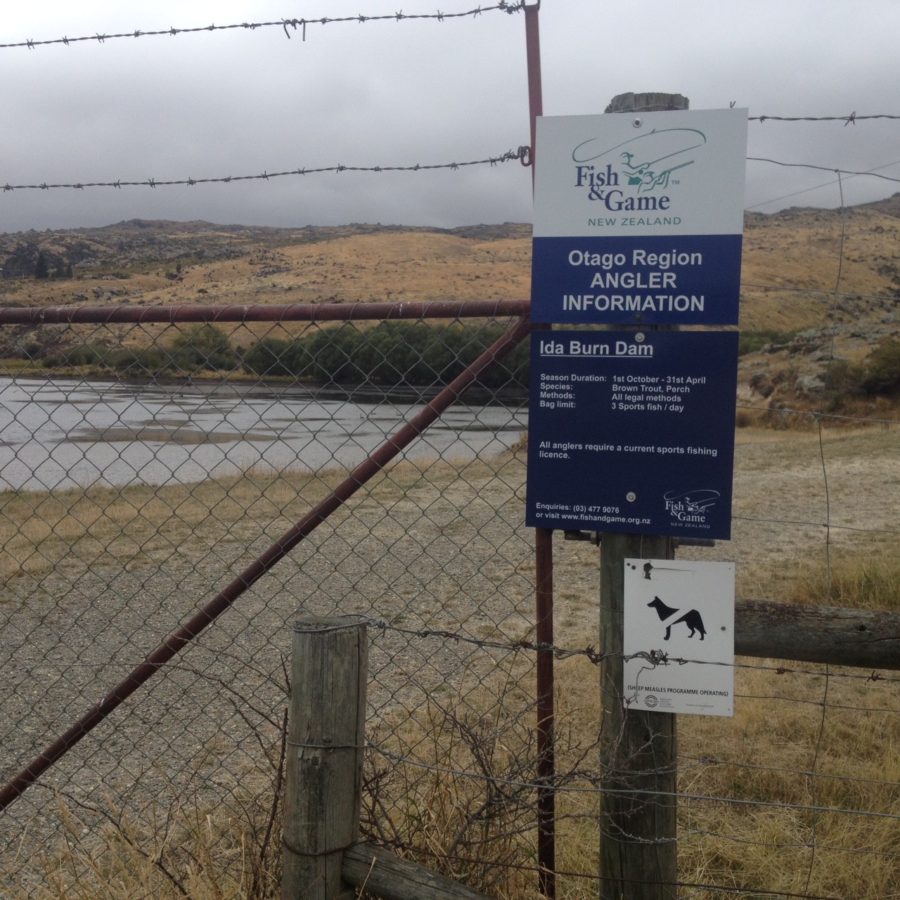 …Ross – You’re very lucky in Turangi – the fishery does handle the daily pressures of increased tourism, throw in the many lake options at Otamangakau, Rotoaira, Kuratau even the back country rivers and the Taupo / Turangi region really is starting to look like a star.
 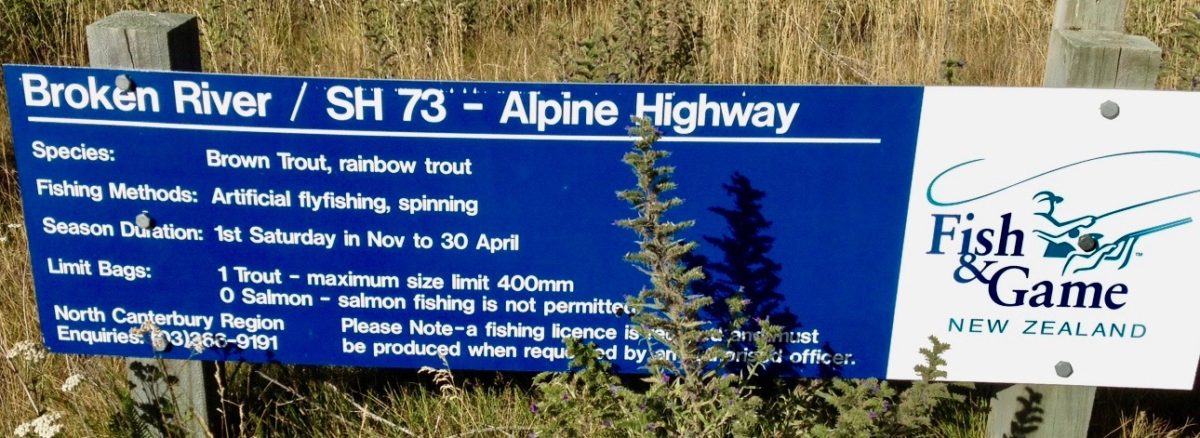 …Fernie BC has come up with a great system to put Canadian anglers first and charge overseas anglers for the opportunity to fish there. Its an arse of a system I dont like it but it wont stop me traveling there and enjoying myself and it benefits locals. Most of all it manages the effects of angling pressure. We need to wake up and learn from this.
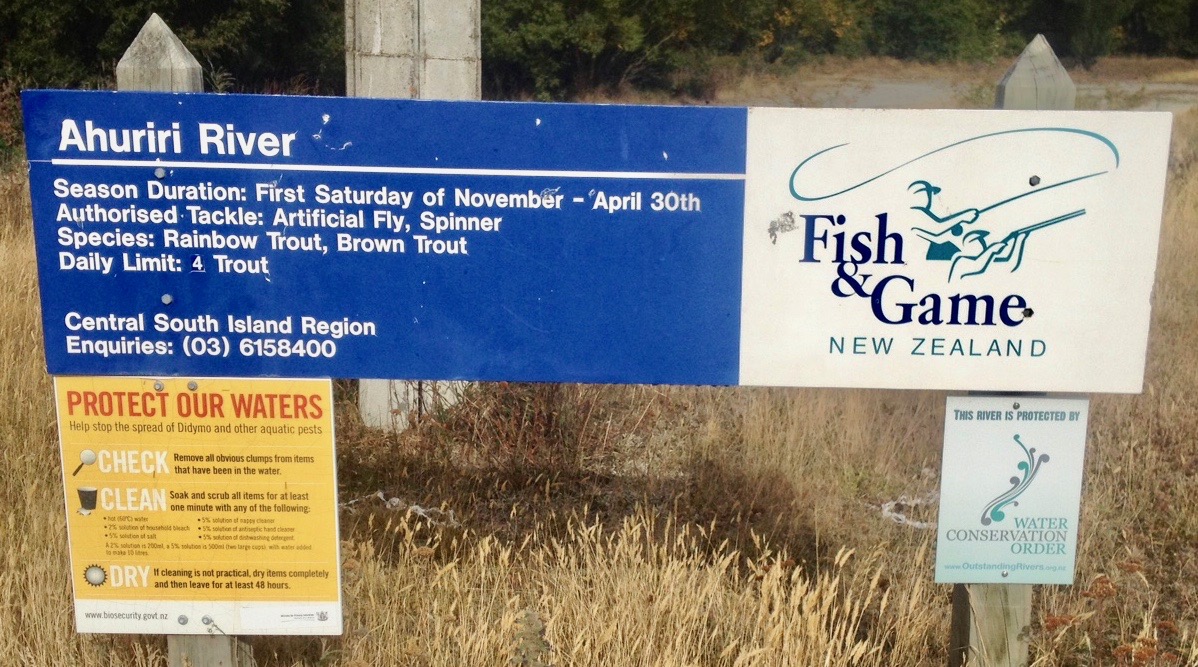 …South Island fishing is buggered for the reasons listed/ its a classic when south islands guides are leaving notes on car windows and abusing other anglers writing about their river protective personality on international websites. All summed up very well in the article. They did forget to mention the DVDs produced by ozzies giving away our heritage on the cheap for personal gain
 …Ross- best place for tourist fly fishing anglers is Turangi. Most friendly fly fishing angler destination in NZ and one of the most welcoming in the world.
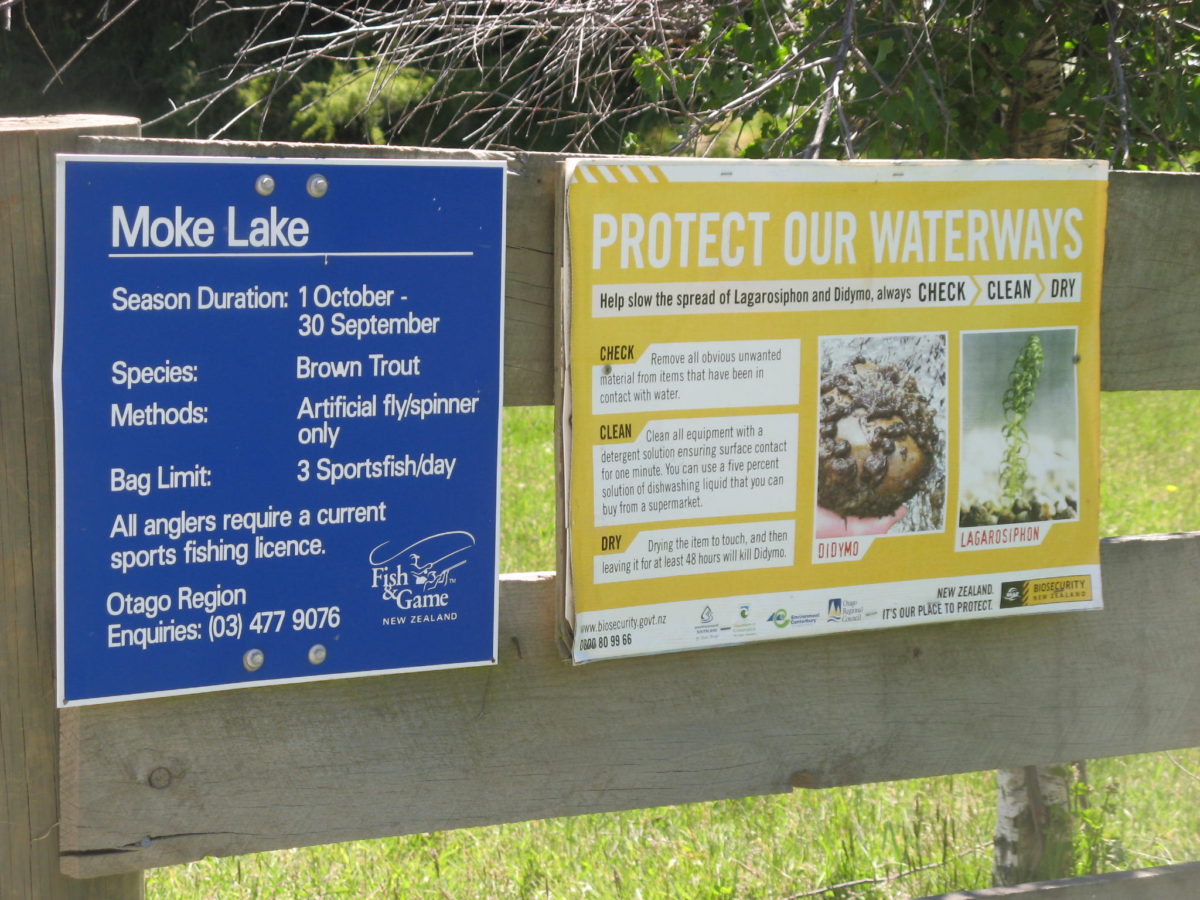 …The controls on tourist fishing the Fernie area where I am visiting in a few weeks would be great information to send these guys. This does sound a bit like what was proposed in Belieze recently.
…Ross this is why I think the Taupo / Turangi fishery is the best in New Zealand and the fishing experience one of the best in the world. Yes Taupo / Turangi lost its way but so many fisheries around NZ and the world have now done the same. However this is the interesting bit as pressure increases in the south island and everywhere else around the globe the Tongariro River can handle that pressure this is where I believe right now the Taupo / Turangi area is so special anglers can take with them a great experience.
 …Those articles coming out of the South Island where guides are writing notes and claiming ownership of rivers for a day – there is no need for this on the Tongariro. Ross I can’t argue the Taupo / Turangi area stacks up on a global scale more than it has in the past 12 years. If anglers took the Tongariro off their must fish list then put it back on again.
 …The “Kiwi anglers first” is a great idea love it and as I mention is becoming the norm on many of the best fishing rivers in the world but I don’t think it applies to the Taupo / Turangi area for all the reasons I mention.
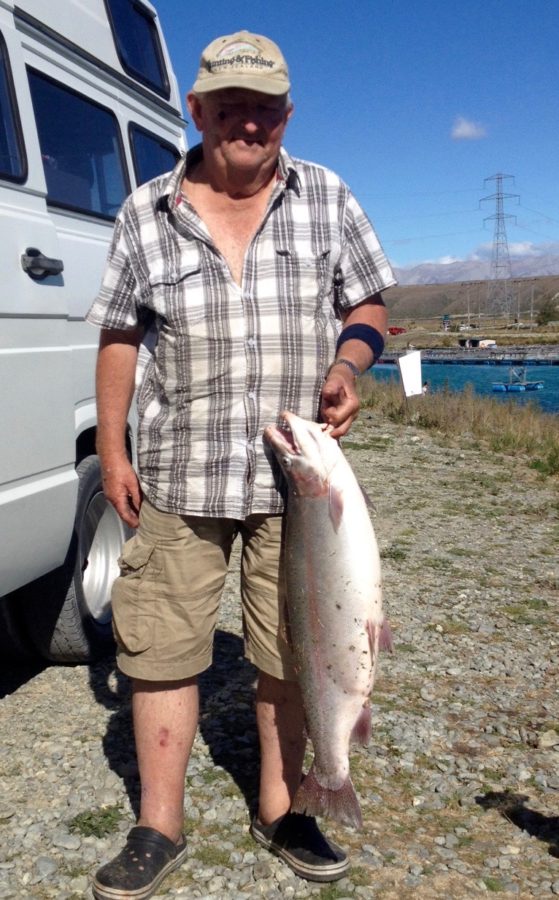 …DOC should be claiming nothing what is making the experience is the people and the ease of access. Where else is a great experience so readily available at a realistic price. This is why the Kiwi Anglers first are so upset, they didn’t see this coming and now seek change. F&G should have had these changes in place years ago if they only got out and kept tabs on world wide fishing trends sorry just a bunch of average joes doing a average job taking life easy with a job for life. absolutely no KPI to be meet from licence holders / stake holders. Good on Kiwi anglers first for realising this and seeking change.
 …Wow. That is some intense reading. How does it sit with you? Your guys coming in from Australia for a month would be stuffed. Big O, and Taupo are definitely tier 1 and they would only be allowed 2 or maybe 3 weeks in a year. It sounds very much like a South Island tourist instigated thing. They have relatively low fish numbers (generally speaking) in the back country and also the fish can be ‘put down’ for much longer than the North Island fish seem to be so I imagine it really is a problem for them. Re the fishery in general, I agree completely.
So what do you think?
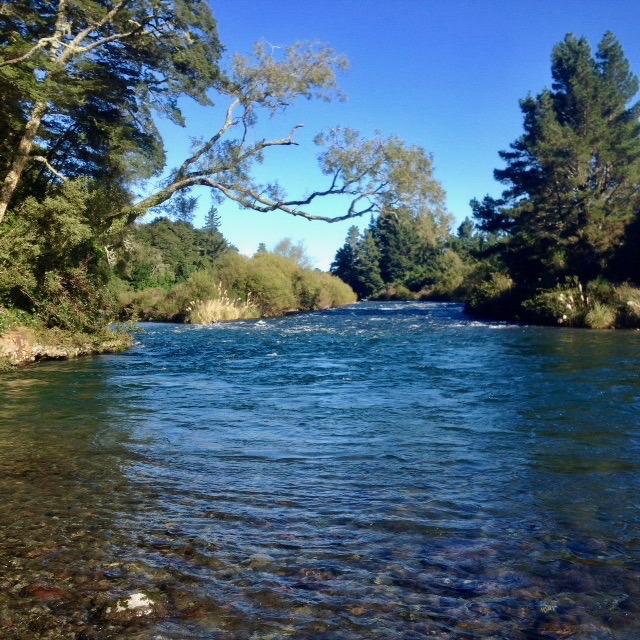 How could they begin to compare this >>> Tongariro Birch Pool last Friday? They don’t stand a chance…
” Pity the fish size sucks. Any how all considered the Turangi experience is stacking up – its the poor fishery management that is effecting the reputation.”
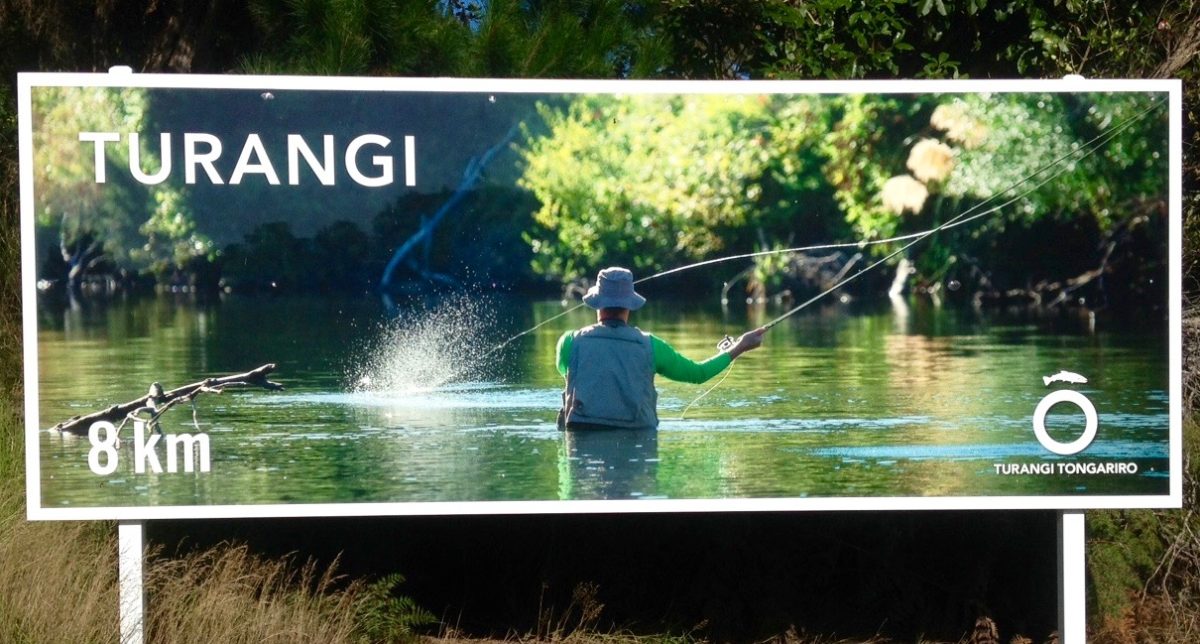 After sending that comment the first angler returned – a regular Jaffa – he went to the Bridge Pool this morning (Saturday peak time), there were five in the pool ahead of him, he landed four in six casts, then moved up to Judges, only one other angler there. Total landed seven, kept two – one a five pound brown, the other a four pound + Rainbow over 50 cm. All on H&C bombs & PT. That has been the pattern for most of this season – weather permitting. Yet the main runs have not started yet. That is a world class wild fishery and I am not even biased…