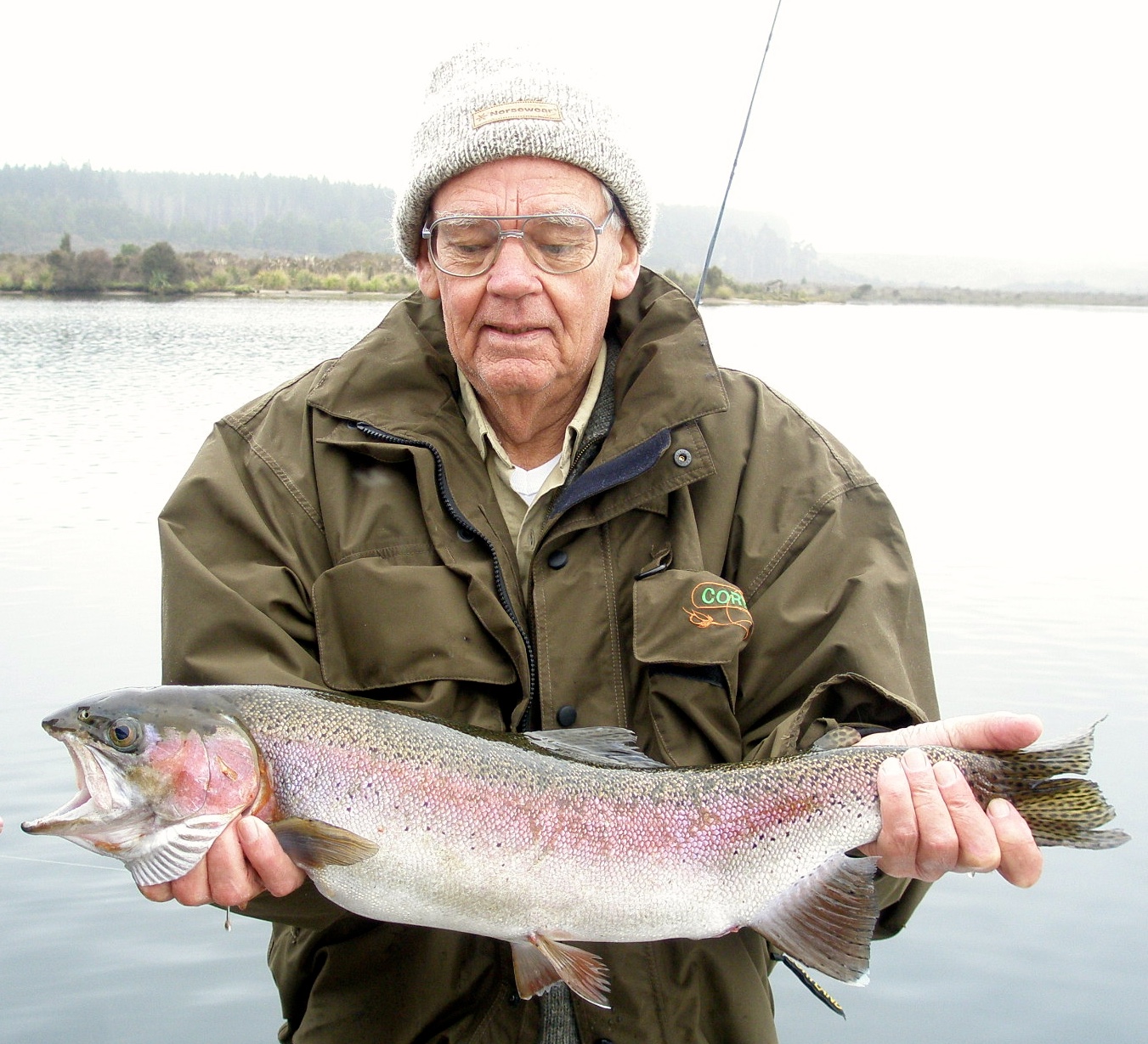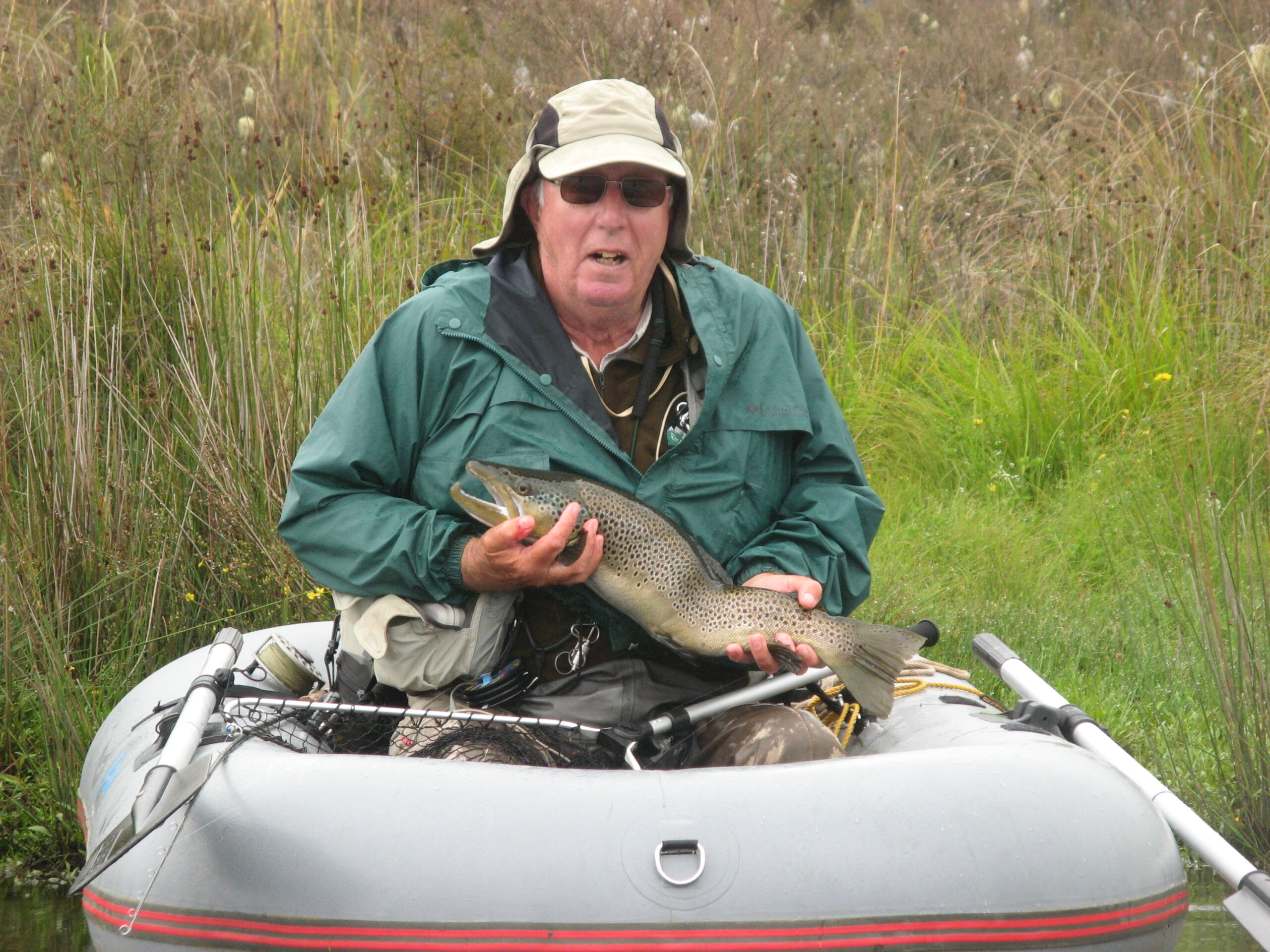
As DOC’s February closure of Lake Otamangakau (Lake O) is now only two weeks away, the rumblings of discontent from anglers have increased.
DOC (Department of Conservation are the Taupo Fishery Managers) have closed the lake for February claiming their changes would “future-proof the iconic fishery” and introduced other measures listed below.
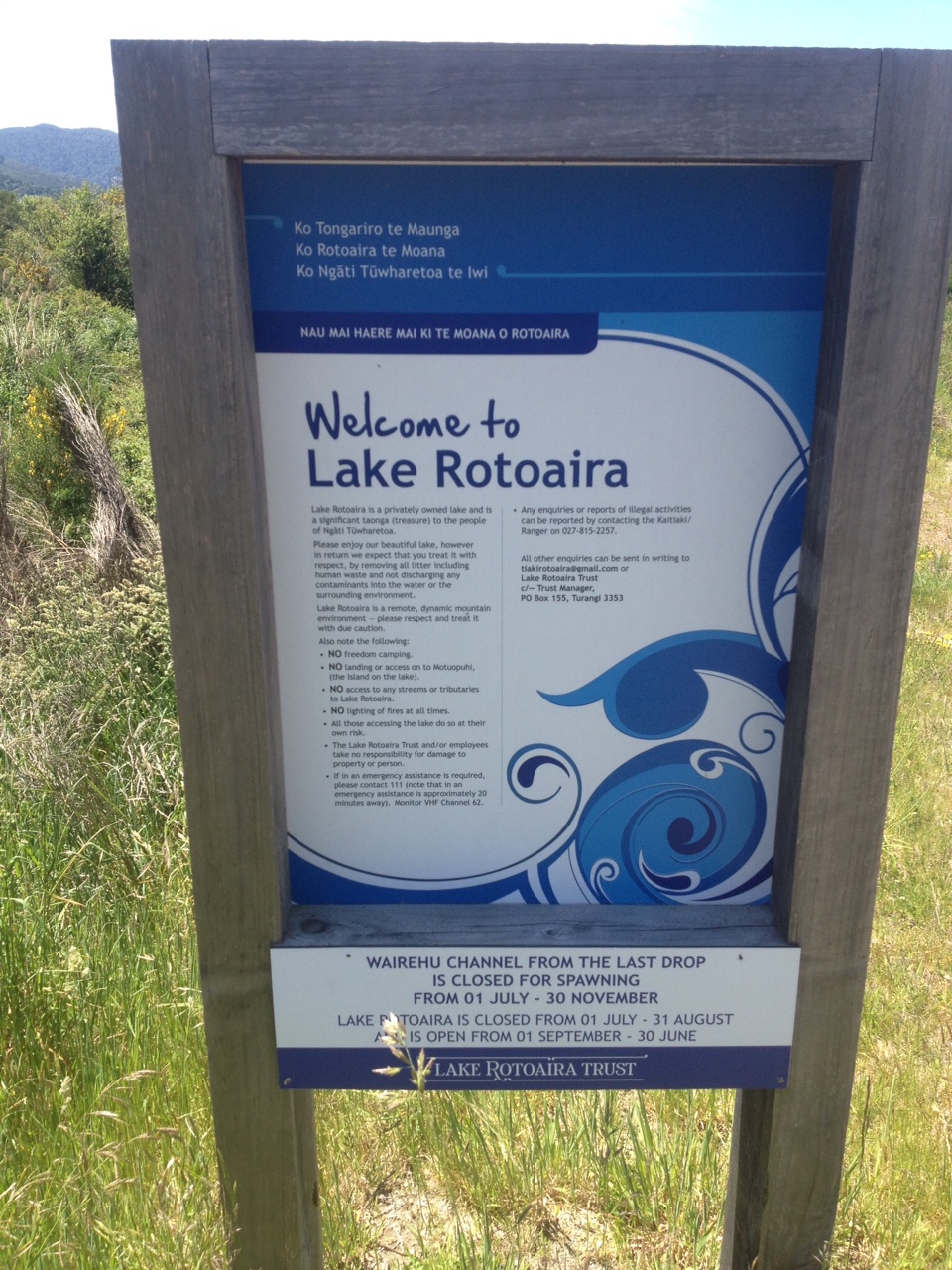
BUT recently anglers’ main issue of concern – the elephant in the room – are the new independent licence requirements at Lake Rotoaira and concerns that LRFT (Lake Rotoaira Forest Trust) will inevitably extend their fishery management to Lake O?
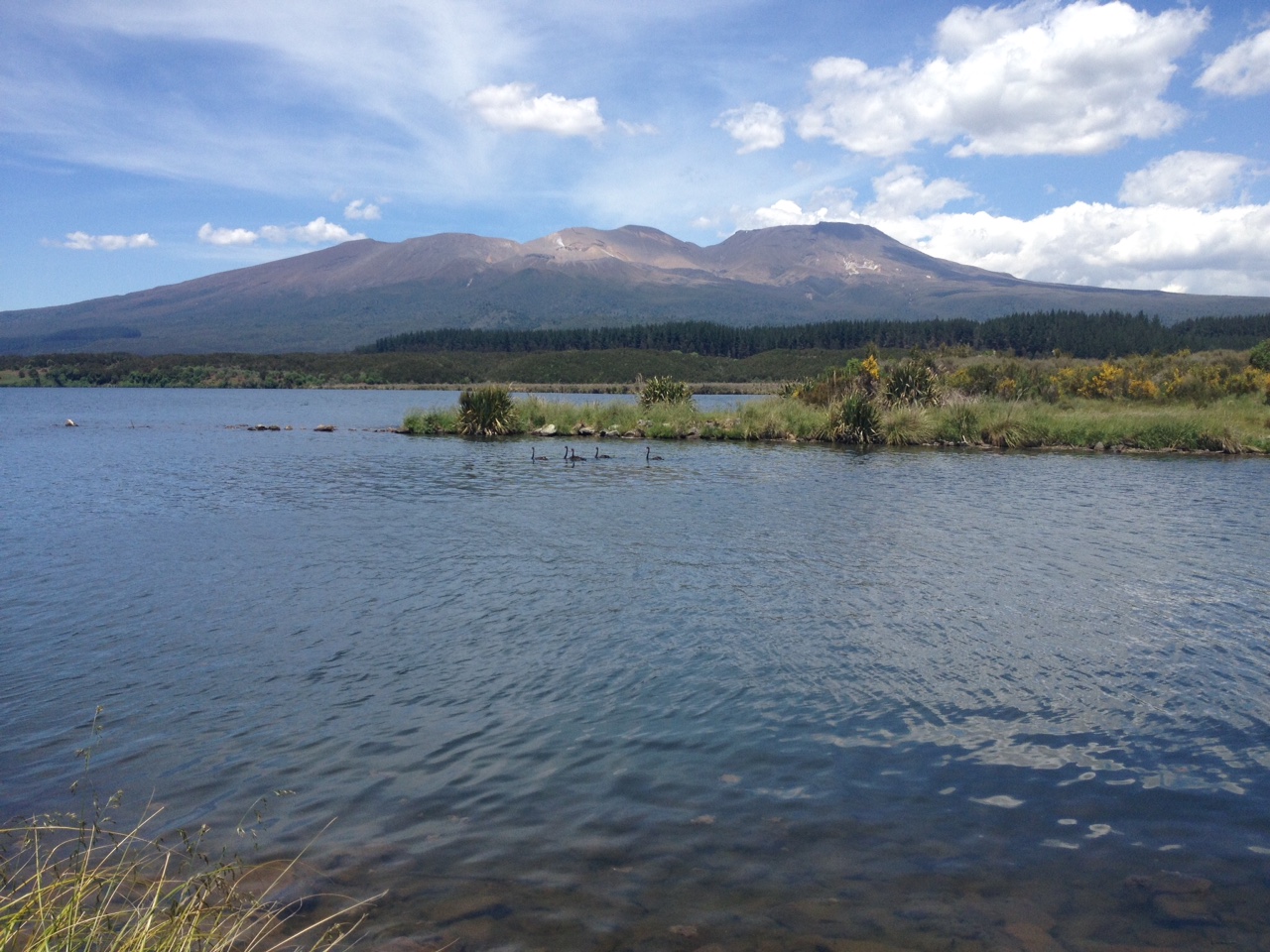
TRM has always promoted healthy discussion between anglers during “happy hour” on many fishy topics but these Lake O changes have really got them rattled. Some conspiracy theorists (?) have suggested there is much more long-term strategy planning going on in the background – such as the controls on the maximum catch size of 55 cm are aimed more to increase the commercial value and status of Lake O as a trophy lake for the future. Their fears stem from LRFT’s stated intentions to convert Lake Rotoaira for trout farming.
When asked for evidence they point out that in 2022 LRFT held two public meetings in Turangi to announce their future intentions to seriously move into the “tourist” business with their intention to become established as the “tourist hub” of the region. LRFT already control key roading access such as the anglers’ access up to Boulder Reach and the Blue Pool where they have installed a gate to control traffic from SH1. More recently gates have been also installed on what were previously considered public roads off the Desert Road – SH1 – into the Kaimanawas. These confine traffic to their new 25 km bike trail and helicopter landing pad and hangar – being completed with a $596,800 grant from the PGF to complete the construction of a Heli-Biking track as well as necessary associated infrastructure.
Recent commercial tourist acquisitions by LRFT include Rafting NZ including all transport and rafts etc. and the local bus company.
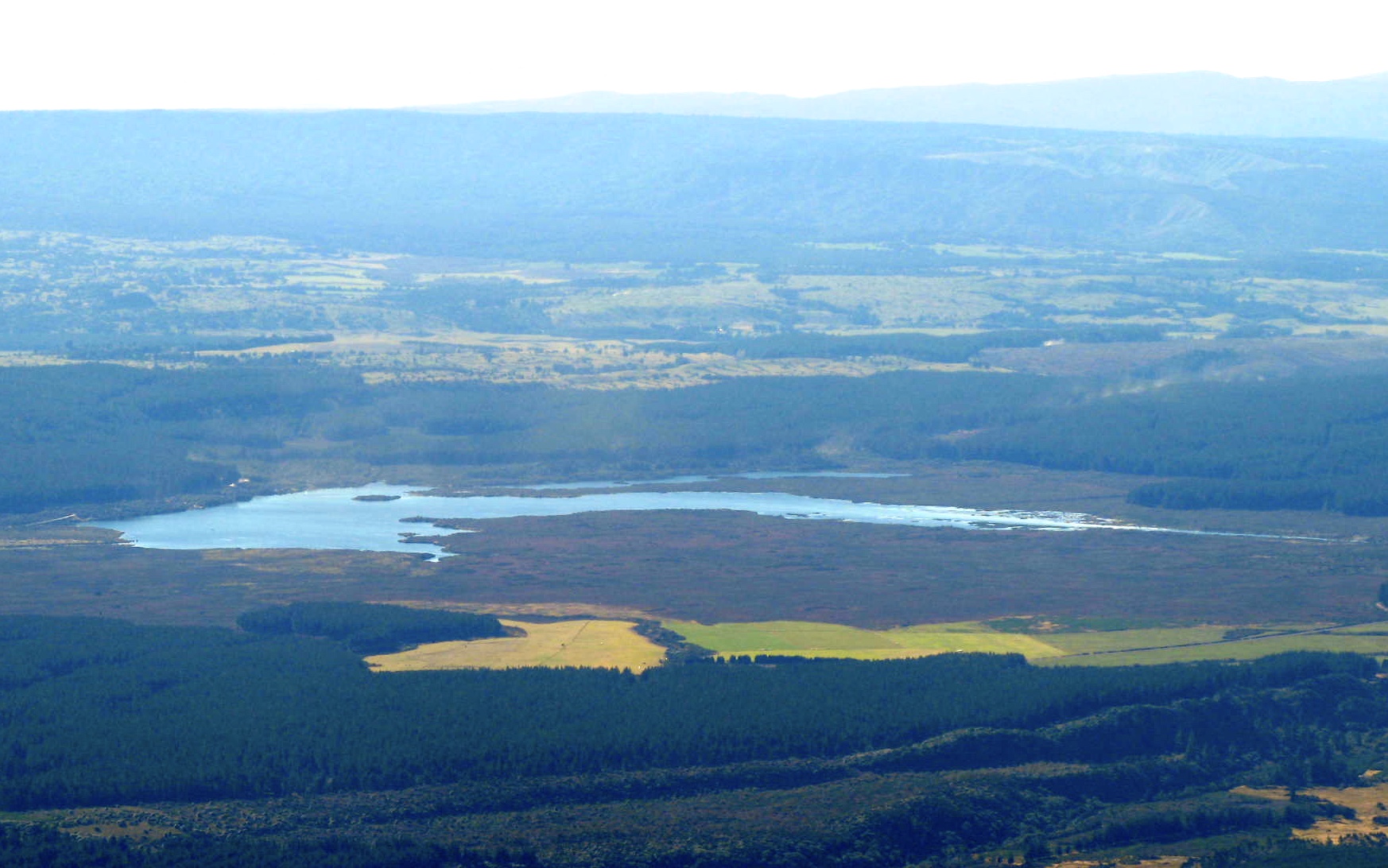
The majority of anglers (these TRM inmates are regular Lake O addicts who have fished the lake for many years) questioned a number of issues and suggested:
1 The relatively short period of time taken (2 years) for the research was inadequate to make any such bold changes.
2 The catch & release trials that DOC claim were “robust investigations over a two year period” were described as a farce.
3 The time needed to move the caught trout to DOC’s holding net was excessive and resulted in far more trout deaths than usual.
4 Anglers complain the results of the trials was never adequately reviewed or published. There was minimal consultation with stake holders.
5 The depth of the cages was inadequate and were more responsible for any excessive mortality rates.
6 The anglers’ submissions were largely a PR exercise and made little difference as the decision was already made.
7 Comparison of angling pressure with Lake Taupo was misleading.
8 Last season was exceptional according to the freezers and smoke house at TRM. Therefore why change?
9 DOC’s claimed “solid scientific evidence” was not proven.
10 Nowhere else in NZ has a trout lake been closed due to high water temperatures.
That indicates general concerns. Individually, these reasons might be considered conjecture or arguable, but together they add up to some unhappy anglers.
DOC’s Lake O update:
The Anglers Notice for the Taupo District 2022’ confirmed changes will be in place at Lake Otamangakau:
Date: 22 June 2022
Regulation changes
Four regulation changes aim to protect the long-term future of this iconic trout fishery.
- The season at Lake Otamangakau will start a month earlier from 1 September.
- Lake Otamangakau will close to trout fishing during February – the hottest month of the year.
- A maximum takeable size of 55 cm for trout will be introduced. There will be no minimum takeable size.
- The bag limit will be reduced to two trout.
DOC Operations Manager Taupō Fishery Dave Conley said, “We are pleased to see support for these important changes which we firmly believe are needed to protect the future of Lake Otamangakau, particularly during the hottest time of the year where elevated water temperatures pose a threat to trout.
“Our technical team, led by Fishery Scientist Dr Michel Dedual, carried out a robust investigation over a two-year period which pulled together data from multiple studies, as well as listening to feedback from anglers. The result was a clear set of proposals backed by solid scientific evidence.”
Why change
The scientific work was triggered by increasing feedback from anglers who reported seeing dead trout in February, when water temperature is at its highest. It was also informed by the ongoing debate within the angling community around encouraging trophy trout at Lake Otamangakau.
Changes to the fishing season are designed to help protect large trout when they are vulnerable to heat stress. Catch-and-release is a popular approach used by anglers at Lake Otamangakau. The warm water phase of our research confirmed trout only had a 60 percent survival rate when released in these conditions, therefore stopping fishing during the hottest month of the year will reduce unnecessary trout mortality.
The new maximum takeable size and reduced bag limit will help protect larger trout. Spawning trap data confirms trout at Lake Otamangakau continue to grow beyond their maiden spawning year. In simple terms, the longer they live the bigger they get. Protecting larger specimens will allow them to grow even bigger and increase the opportunity for anglers to catch fish over 10 lbs (4.5 kgs).
Supporting information
A report analysing the scientific data and detailing management options was released in December 2021: Lake Otamangakau: Research update 2021.
Previous articles:
Trout farm proposal threatens $1 billion trout sport fisheries, anglers say
Bonnie Flaws Sep 10 2020

Trustworthy, accurate and reliable news stories are more important now than ever. Support our newsrooms by making a contribution.
Fishermen are annoyed that a Parliamentary select committee has recommended the Government give “serious consideration to commercialising trout farming”.
The Federation of Freshwater Anglers say trout farming could threaten sports fishery and the environment.
Last month the Primary Production Select Committee considered a petition by Clive Barker to allow commercial trout farming, which is banned under the Conservation Act and Fisheries Act.
The committee report says it is also illegal to sell wild-caught trout, while imports are restricted.
The petition was first presented to the House in May 2018. Barker argued that the legalisation of commercial trout farming would provide employment in rural areas, provide a secure food source and relieve pressure on depleting fish stocks.
He told the committee that the ban was not justified by science or his experience farming salmon.
But ecologist and Federation of Freshwater Anglers secretary, Rex Gibson, said Barker’s salmon farming venture had “failed decades ago”.

Barker farmed salmon by ocean ranching at Pupu Springs in Golden Bay but the venture failed, Gibson said.
Ocean ranching is a type of farming in which juvenile fish are released into the ocean to grow unprotected before being harvested.
But Barker said he had farmed salmon in captivity, after establishing his own brood stock. He was forced to release some fry into the ocean because of regulations in the late 1970s.
The sports trout fishery industry was worth well over $1 billion a year, and would be threatened by the introduction of commercial trout farms, he said.
Fish and Game chief executive Martin Taylor said to fish for trout in New Zealand, anglers must hold a licence. About 100,000 licences were issued every year, and about 10 per cent of those went to foreigners.
Gibson said the industry supported thousands of jobs directly and indirectly as rich international tourists came to New Zealand to enjoy angling. Most of that money was spent in rural areas.
A trout caught by an overseas tourist or domestic sports fisher, was effectively worth hundreds of dollars a kilogram to the economy, with all the ancillary tourism and sports-related costs factored in, “but farmed trout may not even sell as much as farmed salmon currently at $34 per kilogram.”
Ecological disasters in the United States and Europe had resulted from trout farming operations, he said.

“Invariably overseas, fish have caught diseases in fish farms, they have got into the wild fishery and the tourism industry has taken a big hit,” he said.
Gibson cited the risk of disease outbreak from crowded pens, increased poaching and black market sales, genetic damage to the country’s wild trout varieties from farm escapees, pollution from effluent and the need for large quantities of fresh water to maintain trout farms.
“Such projects will inevitably require high taxpayer funded ministerial input to deal with disease, monitoring and environmental problems.”
Despite the fact that, the Fish and Game Council had opposed the petition saying New Zealand was one of the top trout fishing destinations in the world, in August it had determined to look at the issue “with fresh eyes”.
Taylor said Fish and Game had been opposed to commercial trout farms for decades but was now funding research to determine their suitability to the New Zealand environment.
“We’ve never got independent research establishing the biosecurity risks of different types of trout farming.
“We very may well come to the same position where we oppose all types of trout farming, but until we’ve done the research it makes it too difficult to say a flat no,” he said.

In its report the committee noted that Barker had the support of Ngati Pikiao and other iwi groups, along with Trout New Zealand and Bay of Plenty Regional Aquaculture Organisation, the Lake Taupo Forest Trust and Lake Rotoaira Forest Trust.
Barker told the committee that the sale of fresh trout in restaurants would support the tourism industry, while smoked trout could be an export earner, and boost the rural economy.
The Department of Conservation said in its submission that trout framing could be a biosecurity threat, because it invariably led to new genetic material being imported to introduce desirable traits that were not found in the domestic trout, and as a result more monitoring would be required.
Ministry for Primary Industries recommended to the committee that a review of risks around biosecurity and disease, poaching, the effect on wild trout population and economic potential would need to be undertaken.
However, the committee said that because trout fishing hatcheries already existed in New Zealand it was illogical to argue the risk of disease as a reason to prohibit commercial farming, as it was already present.
May 13, 2019
Lake Rotoaira Forest Trust keen on land based trout farming around Lake Rotoaira
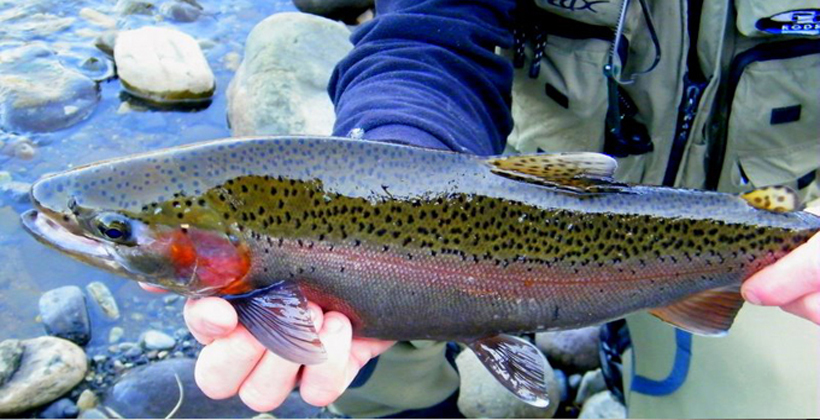
The Māori owners of a lake under Mount Tongariro are backing an attempt to allow trout farming.
Parliament’s primary production committee is considering a petition from salmon farming pioneer Clive Barker for restrictions on the farming and sale of trout to be lifted.
Lake Rotoaira Forest Trust Project Manager Tiwana Tibble says the trust’s Tūwharetoa owners are looking closely at the debate, as their lake could be suitable for aquaculture.
He says an attempt to allow trout farming in the 1970s was thwarted when fish and game lobby campaigned against then-minister Duncan McIntyre, costing him his Hawke’s Bay seat, but the success of the salmon industry shows what can be done.
“Down in Twizel they’ve got farms at altitude there and they’ve got these whopping trout, because they feed off the food missed by salmon in the pens. That’s a great example 40 years later where trout farming and recreational fishing can go hand in hand. We’ve got to come forward modern,” Mr Tibble says.
Lake Rotoaira Forest Trust is pushing forward with plans to farm salmon in its waters.
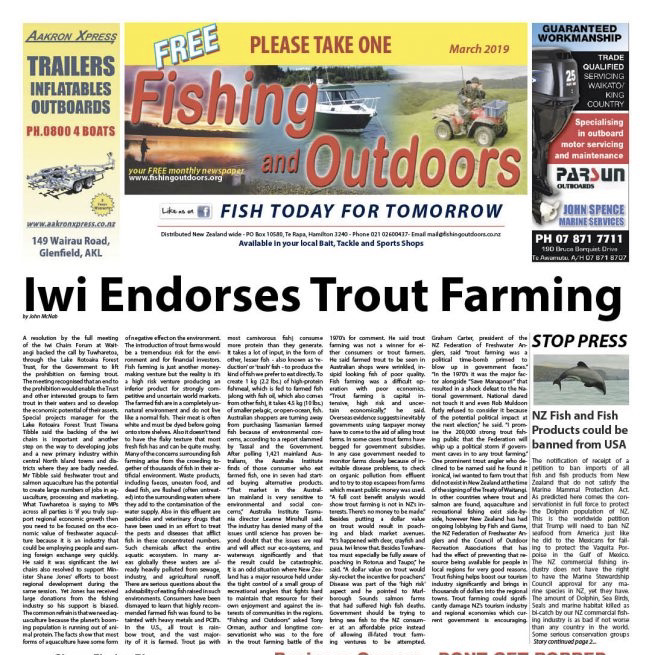
Examples from a trophy lake: