
Question for fishos – With the decline of the popularity of the Bridge Pool, which is now the most popular pool on the Tongariro River? And who named it? There are over fifty to choose from.
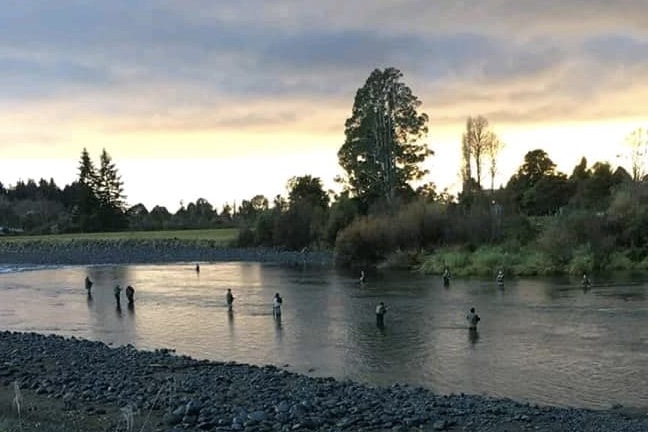
Photo above illustrates how popular it could get at this same time – in June 2018. It was arguably Turangi’s most popular tourist attraction and added much to the town’s reputation as “Trout Fishing Capital of the World”.
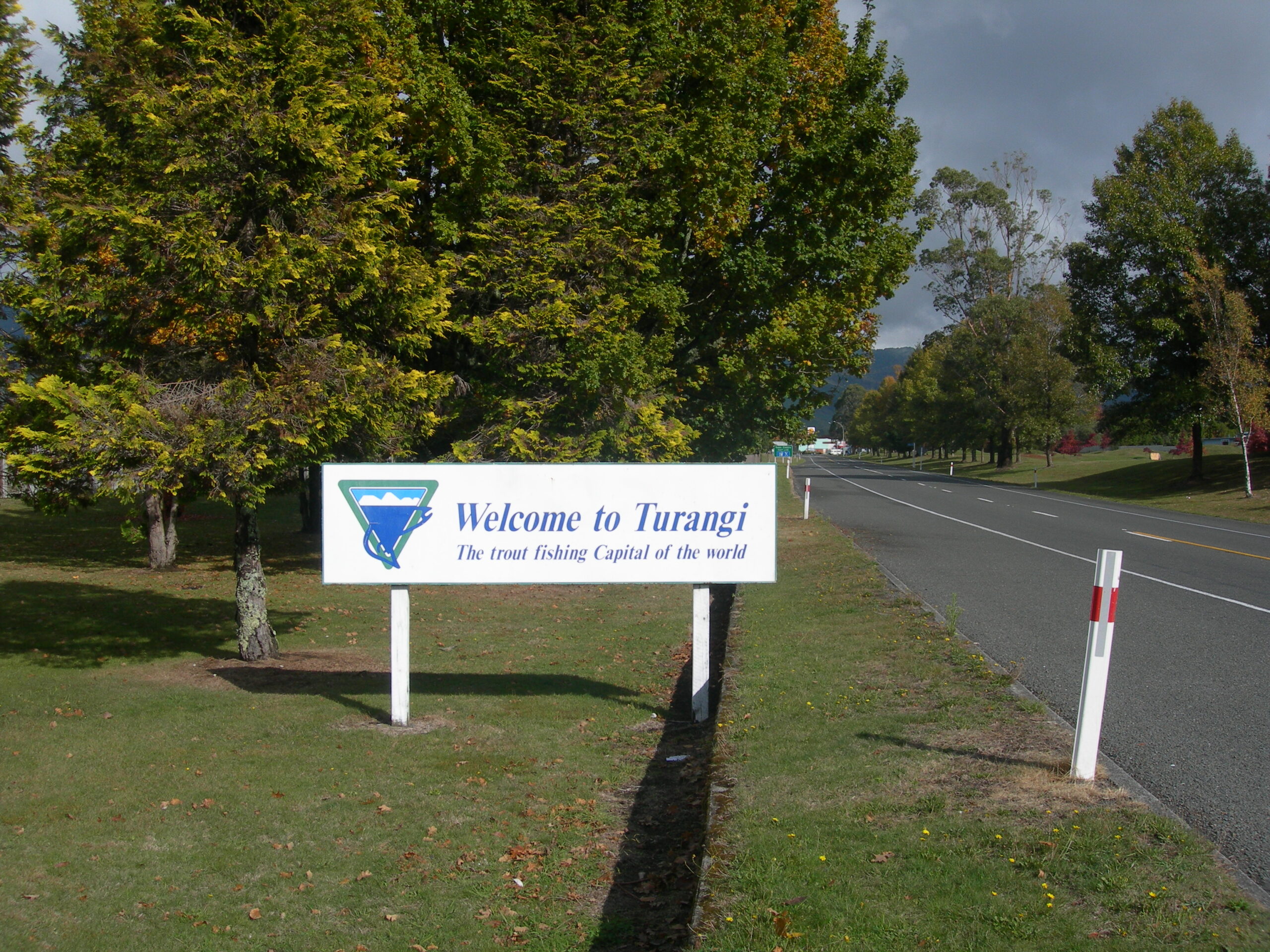
It is amazing there were not more ‘nose-to-tail’ car accidents on the road bridge as drivers craned their necks to count the anglers below the bridge.
Almost every day recently disappointed tourist anglers have been asking SWMBO what happened to their favourite Bridge Pool. Many have been missing since pre-covid and are surprised at all the river changes during the last three years.
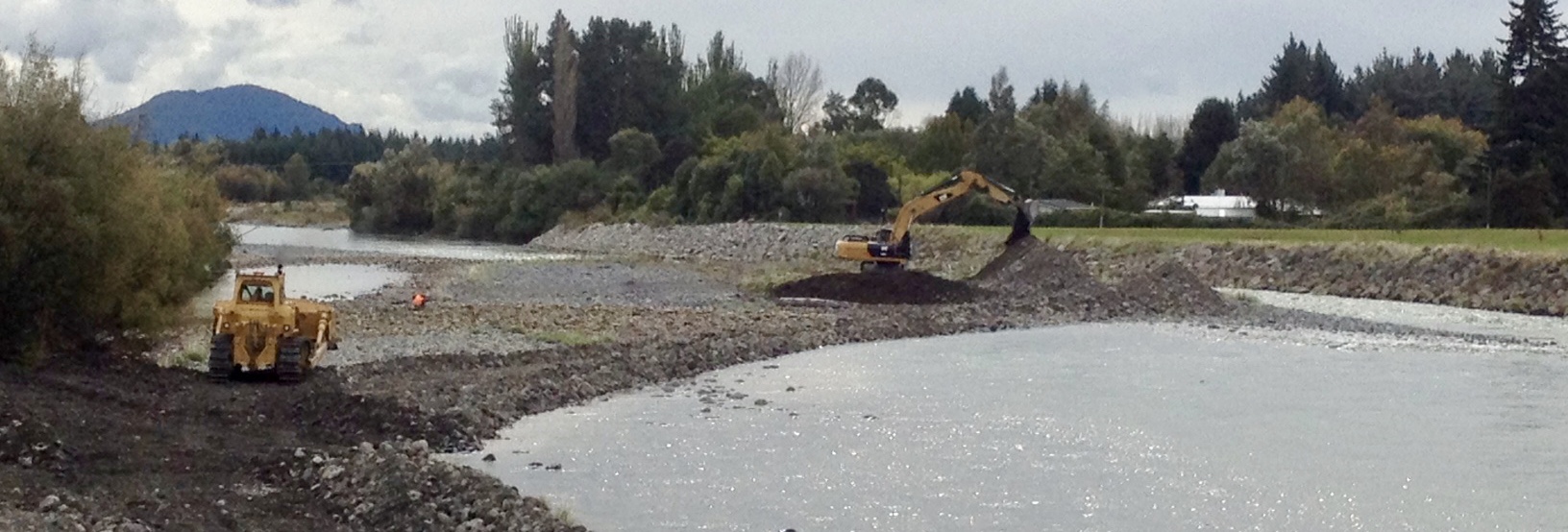
The older 2018 photos are interesting to illustrate WRC (Waikato Regional Council) contractors landscaping the river bed to shift the current more over to the TLB away from the Herekiekie Street, claimed to be flood protection works, may have been part of the previous problem.
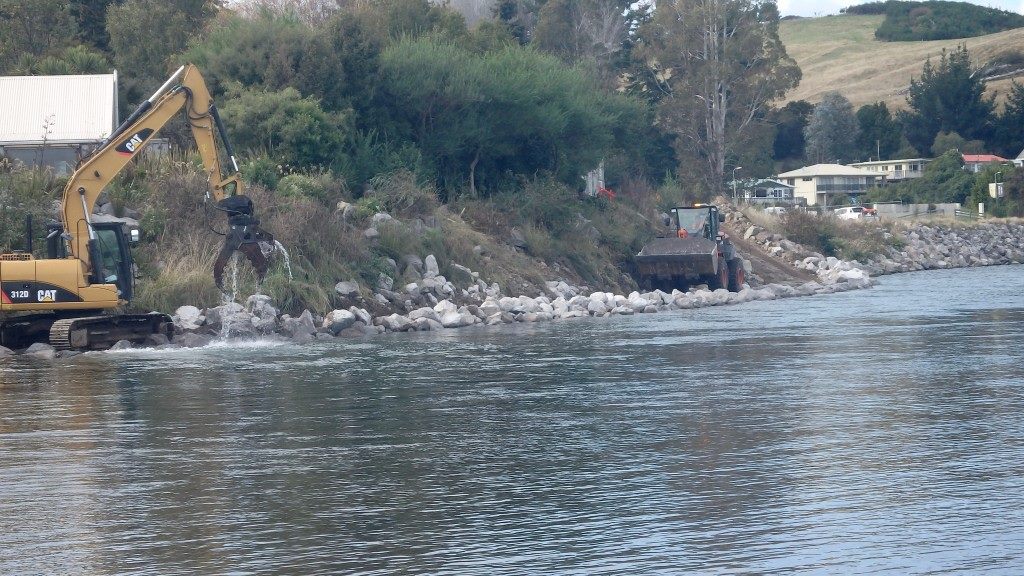
The photo above was more remodelling under way below Hereliekie Street, lower down river in 2016. Nature usually finds its own course. Like all rivers, the main current moves up and down from one side to the other just to make life more challenging for anglers.
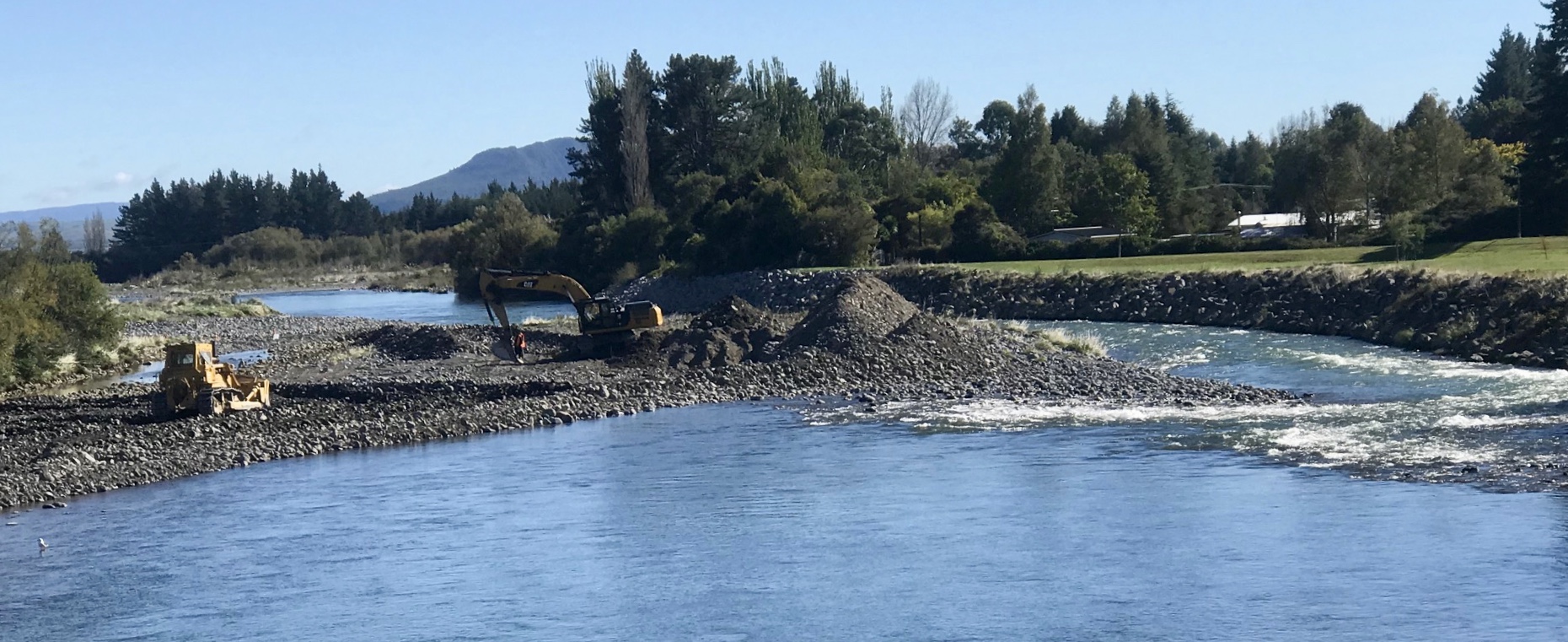
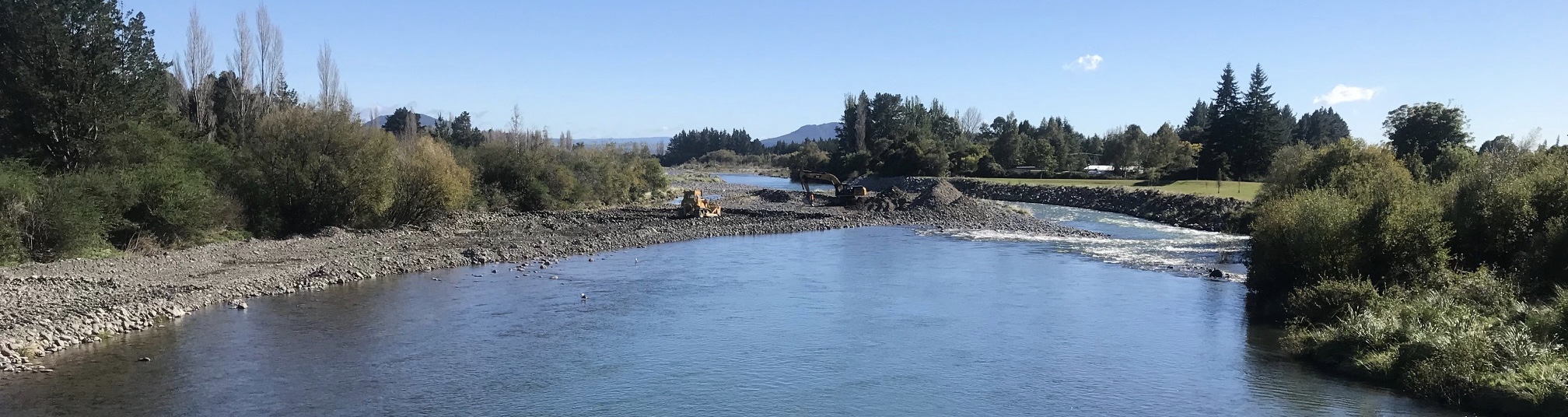
The photos tell the story. Over the last year it has shallowed out and turned into a fast powerful unfishable flow. The entire contour has changed again since then.
The most recent photos below were taken midday Sunday with the flow around 27.5 cumecs. A fast current has gouged out a deeper ditch in the middle of the river where it is impossible to get a line down to where the fish are sneaking through on their spawning runs underneath the fast water.
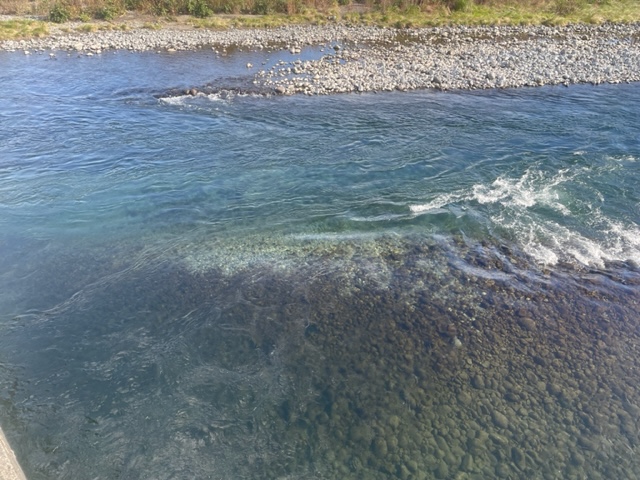
Two anglers were spotted on the TRB (True Right Bank looking downriver) wet lining through the patch of flat water which has been most successful in the past week.
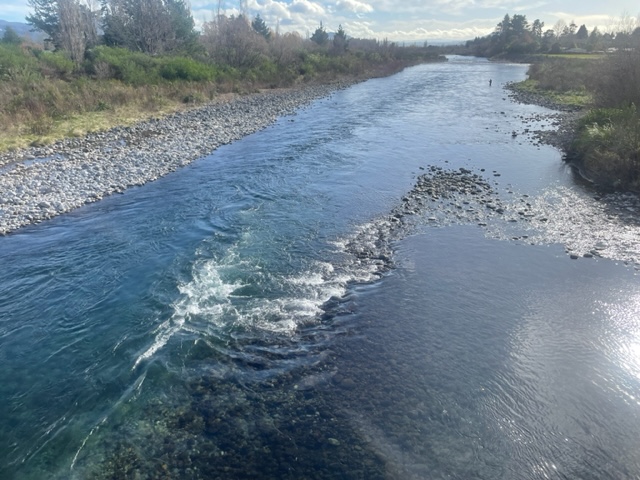
Two more were seen in the lower Bridge Pool opposite the end of Herekiekie Street.
THE DAISY POOL
But, as indicated in the photos below, the most populated fishy spot was what we call the ‘Daisy Pool’ just above the road bridge, about 50 m above the original Bridge Pool and below the confluence of the main flow from Judges Pool and the side channel around under the cliff from the old Lonely Pool. Most important, it is less than 5 minutes level walk (in waders) from TRM.
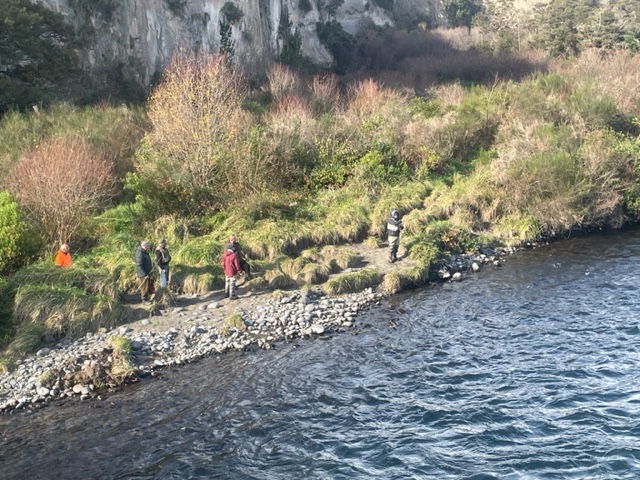
The Daisy Pool can be fished off the bank – casting without wading – on the TRB or by wading out from the TLB – more popular for lefties.
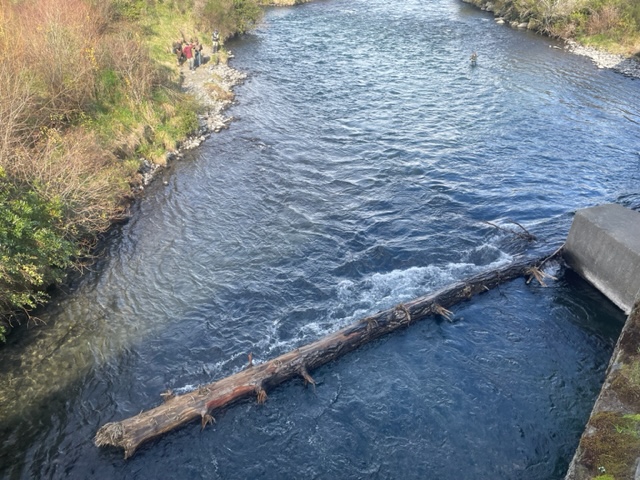
Who was Daisy? Where did the “Daisy Pool” name come from?
This spot has been known by several other names in the past. Many pools and parts of the river were dramatically changed or moved during the Tongariro Power Development in the 1970’s.
It is so close to the Bridge Pool that some have referred to it as the ‘Upper” Bridge Pool.
TRM’s usual main reference for pool names history is the booklet by Allan & Barbara Cooper, “Pools of the Tongariro”, which refers to it as the “Groin”. Prior to their 1975 publication, it was referred to as the “Weir Pool” described by R L Begg in the NZ Fishing and Shooting Gazette in June 1936. But on Whitney’s map of 1932 and on the earlier 1928 map it is called the ‘Daisy’ Pool.
So TRM has adopted the original name, now over one hundred years old.
Where did the “Daisy” name come from?
The name must be very old as SWMBO knows all the words to the song.
It is said to have been inspired by Daisy Greville, Countess of Warwick, one of the many mistresses of King Edward VII. It was one of the earliest songs sung in music halls in 1892, by which time the bicycle had become an everyday sight in Victorian life. Henry Dacre composed the song that became immensely popular, both in the London music halls, and also in America.
Much later NZ’s most popular radio host for the 9am to midday state owned ZB channel called herself “Aunt Daisy”. She was early radio’s most famous name, along with the afternoon programme by Uncle Scrim. Her popular show was always introduced with the “Daisy, Daisy” (see all the words below) song. SWMBO listened to her every day when She was supposed to be doing correspondence lessons on the remote farm.
TRM inmates are such curious inquisitive fishos with an insatiable appetite for all these little hardly known historic details. So now you know!

When Dacre, an English popular composer, first came to the United States, he brought with him a bicycle, for which he was charged import duty. His friend William Jerome, another songwriter, remarked lightly: “It’s lucky you didn’t bring a bicycle built for two, otherwise you’d have to pay double duty.” Dacre was so taken with the phrase “bicycle built for two” that he soon used it in a song. That song, Daisy Bell, first became successful in a London music hall, in a performance by Katie Lawrence. Tony Pastor was the first to sing it in the United States. Its success in America began when Jennie Lindsay brought down the house with it at the Atlantic Gardens on the Bowery early in 1892.
The song was originally recorded and released by Dan W. Quinn in 1893.

Daisy Bell by Harry Dacre
There is a flower within my heart
Daisy, Daisy
Planted one day by a glancing dart
Planted by Daisy Bell
Whether she loves me or loves me not
Sometimes it’s hard to tell
Yet I am longing to share the lot
A beautiful Daisy Bell
Daisy, Daisy, give me your answer do
I’m half crazy all for the love of you
It won’t be a stylish marriage
I can’t afford a carriage
But you’ll look sweet upon the seat
Of a bicycle built for two
Aunt Daisy – New Zealand’s first celebrity foodie
Maud Basham, better known as ‘Aunt Daisy’ was a radio broadcaster and personality who broadcast for 27 years (1936-1963) every weekday morning to New Zealanders.
She greeted listeners with her boisterous catch call: ‘Good morning, everybody’, then regaled listeners with recipes (mostly supplied by her followers), home hints and sponsors’ products. In addition to her role as a pioneer female celebrity broadcaster, Aunt Daisy was also New Zealand’s first celebrity foodie.
She became famous and loved: before sailing to the United States on a goodwill trip in 1938 trip, she had a farewell in Wellington’s Town Hall which overflowed with fans, and the train stations en route to Auckland’s port were crowded by well-wishers singing her programme’s theme song ‘Daisy, Daisy, Give Me Your Answer Do’.
Early career
Daisy was born in London in 1879. Her widowed mother emigrated to New Zealand in 1891, settling in Taranaki where Daisy later became a pupil-teacher with a keen interest in acting, singing and debating. She married civil engineer Frederick Basham and the couple moved to Wellington in 1922.
She started her radio career singing for an experimental radio station and began broadcasting seriously in 1928 when, in the lead up to the Great Depression, her husband was put on half-pay.
Building a following
She became known as ‘Aunt Daisy’ when she presented her first children’s programme. She went on to work for a number of radio stations before joining 1ZB (Newstalk ZB’s ancestor) in 1933 to present a 30 minute programme for women. She built up a huge following, limited only by the restricted transmission range of the station.
State-owed IZB in Wellington was the first radio station to take advantage when the 1936 Broadcasting Act 1936 introduced commercial radio (although 1ZB was still state-operated) and Aunt Daisy officially began promoting products. As the ZB network expanded throughout New Zealand, she became a national celebrity.
An expert talker
Aunt Daisy would talk; read an uplifting ‘thought for the day’; share recipes, home hints, and advice – and chat about products she’d agreed to promote. Aunt Daisy was a famously fast talker, managing between 175 and 202 words per minute (wpm); all clearly articulated and precisely spoken. By comparison, the usual conversational speed is 120-150 wpm; radio hosts usually manage 150-160wpm.
Products she promoted were often sold out within hours; her listeners trusted her implicitly because they knew she would only advertise products she had tried herself.
World famous in New Zealand
She went on a world tour in 1938 and paid wartime and post-war goodwill visits to the United States where her irrepressible manner and unquenchable optimism earned her the label of ‘The Dynamo from Down Under’.
In New Zealand she was regarded as ‘the first lady of radio’ and was recognised in the broadcasting industry as one of the country’s most potent advertising forces. Her influence was enormous. She was made an MBE in 1956 and continued broadcasting her daily programme with rarely a break until a few days before her death in Wellington on 14 July 1963 at age 84.
New Zealand’s first foodie
Her first cookbook was published in 1934; it was the first of ten. The Aunt Daisy Cookbook has remained in print since it was first published in 1968, and it’s been reprinted 21 times. It was a heritage collection of her recipes, compiled by her daughter, the late Barbara Basham. All proceeds go to a charitable trust that funds medical research in New Zealand.
The cookbooks provide a fascinating insight into how much our world has changed. There are ingredients such as beef dripping, lard, and suet which are rarely used today and they include suggestions such as substituting crayfish for meat, making ‘Faggot Loaves’ from liver and bacon; ‘Sea Pie’ from beef; and the ‘Good Pastry for Housewives’.
Its baking section has stood the test of time, however, with Kiwi classics such as ‘Brandy Snaps’, ‘Anzac Biscuits’, and ‘Bumble Bees’ although it would be a brave person who served ‘Māori Kisses (Eggless)’ these days!
Having been admonished as a child for talking too much, Aunt Daisy built what some might have considered an unfortunate characteristic into a professional, enduring and lucrative career – one that has known no equal in New Zealand.