

After a riverbank discussion with another Tongariro junkie, this post from ten years ago deserves repeating, as we were in complete agreement that many do not realise the benefits of fly fishing for the elderly. Indeed, a survey of anglers suggests that Tongariro River fly fishing is increasingly favoured by geriatrics.
Don’t act your age!…

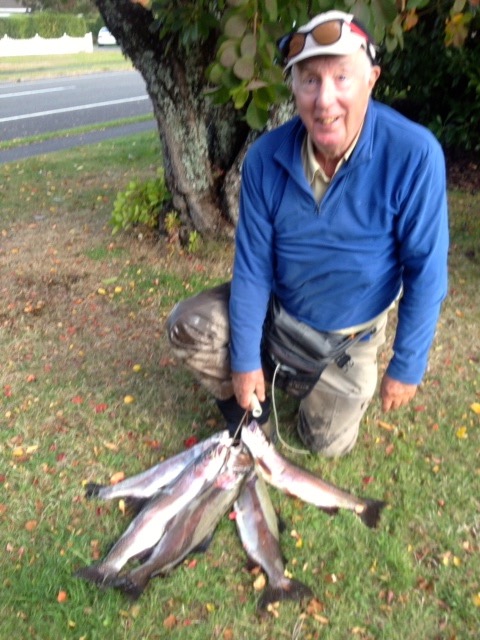
Recently several TRM inmates had the pleasure of celebrating another 80th birthday with an angler who has been a regular visitor here for about the last ten years. He is from West Island and first came to NZ fishing in the 1970’s.
He is one of several who enjoy being formally upgraded – promoted from inmates status to BOF’s (Boring Old Farts) by SWMBO to recognise their contribution to TRM and local fishing lore.
Which leads us into one of the most fascinating often discussed topics at TRM – how to make the most of the retirement years and stay forever young?.
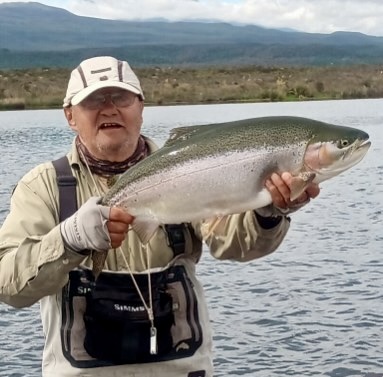
The obvious aim of so many in retirement is to achieve ‘happiness’.
After 40-plus years of working and saving, it is a huge adjustment to redirect concentration and energy into the enjoyment factor.
For many, retirement may revolve around family, hobbies, gardening, travel, golf, or bowls.
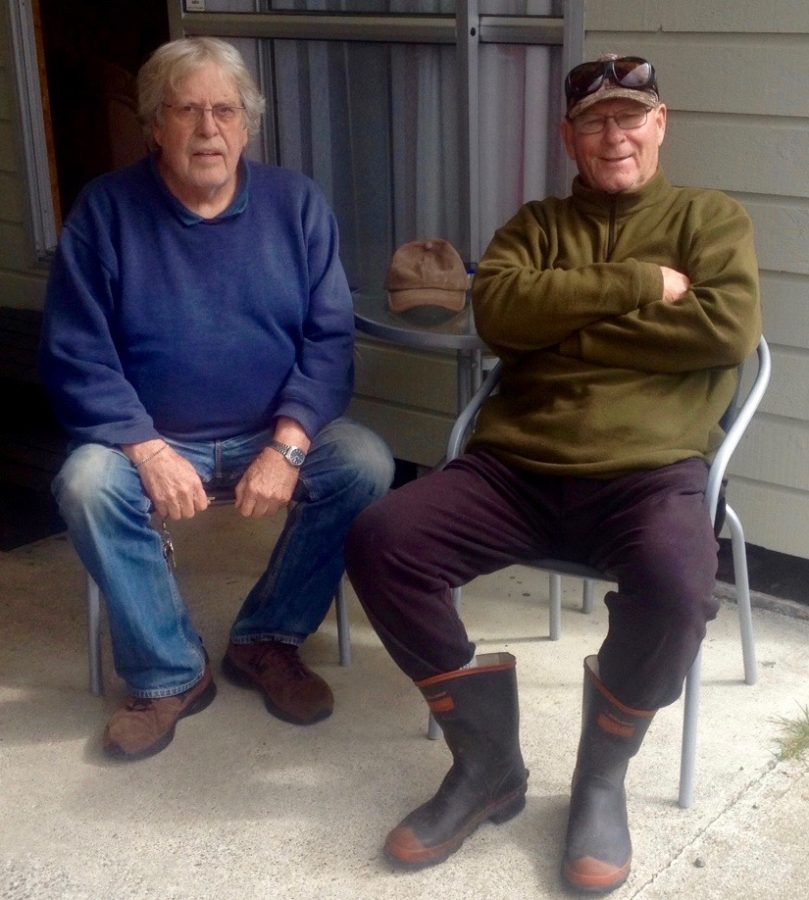
Then there are the fortunate few, the lucky ones who chose trout fishing for their retirement lifestyle – to keep them young.
Trout fishing is the ideal activity for those folk resisting the slowing-down process in their dotage, providing a daily challenge that requires focus, skill, experience, and sedate fitness.
Any inexorable process of ageing is more than compensated by increased enjoyment in fly fishing activities.
A stroll along the town pools of the Tongariro confirms that most anglers are well into their retirement years and enjoying the sport more than ever before as they finally have the time and patience to be successful.
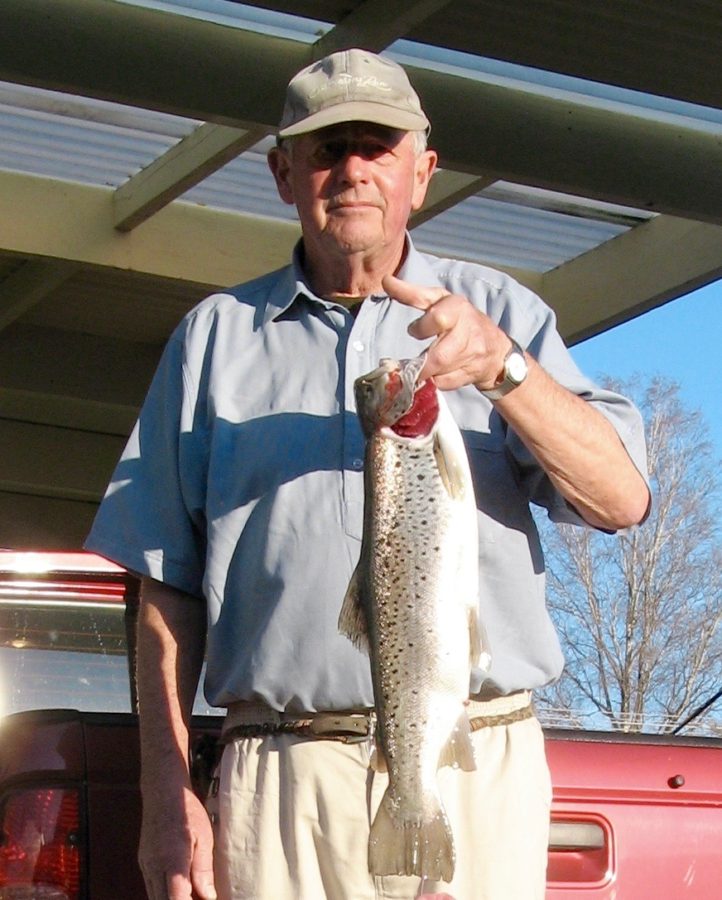
The trout have no idea of the age factor or any restrictions regarding the muscular power and agility at the other end of the line.
The aged curses, such as inevitable loss of memory, diminished strength, and energy, do not matter anymore as the fishing challenges keep them thinking ‘young’ spiritually.
And that is the key.
The BOF’s category of guests at TRM acknowledge any increase in their chronological number being deftly handled by adjusting their fishing style.
They may not wade so deep in the fast current or cover as many pools in a day but make up for it by sheer cunning.
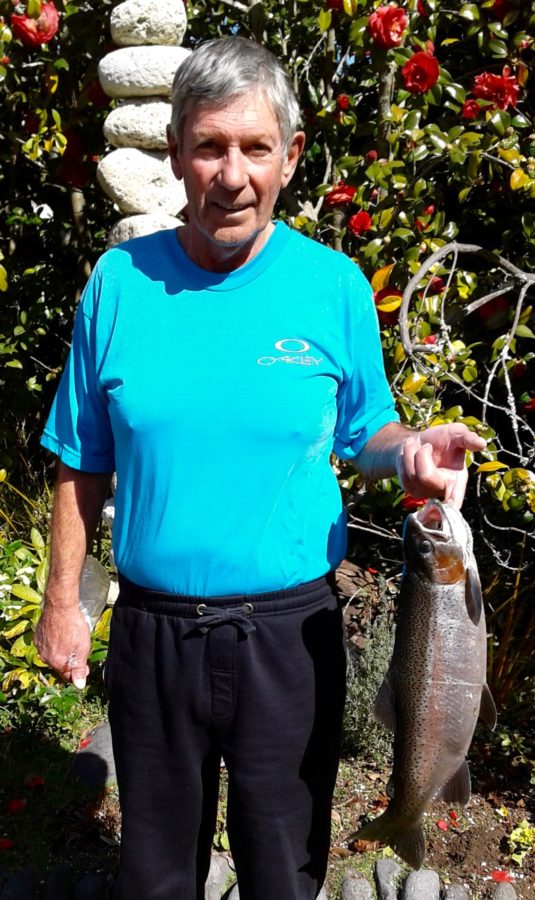
Their positive attitude and increased curiosity and scheming to overcome any physical weaknesses stretch their ability to keep them thinking and acting ‘young’.
So often, we admire their clever little ploys to compensate for increased maturity.
They reassess and value the really important considerations in their remaining life – by that stage of life, it is not about how much their house is worth or their bank balance – as they appreciate their continued fun and lifestyle satisfaction, even beyond that which comes from happy relationships, by enhancing their physical and mental condition, allowing them to pursue the wily Tongariro trout.

The challenge of the gentle art of trout fishing provides an achievable, longer-term goal for them every day, to focus on for the rest of their lives. Their fishing trips are based on how they feel and usually far surpass any specially designed age-related activities deemed appropriate to their years or what is endured in so-called ‘retirement’ villages, farming the elderly.
Instead of concentrating on survival, they are still living their dream in nature’s wonderland.
We, younger anglers, salute them.
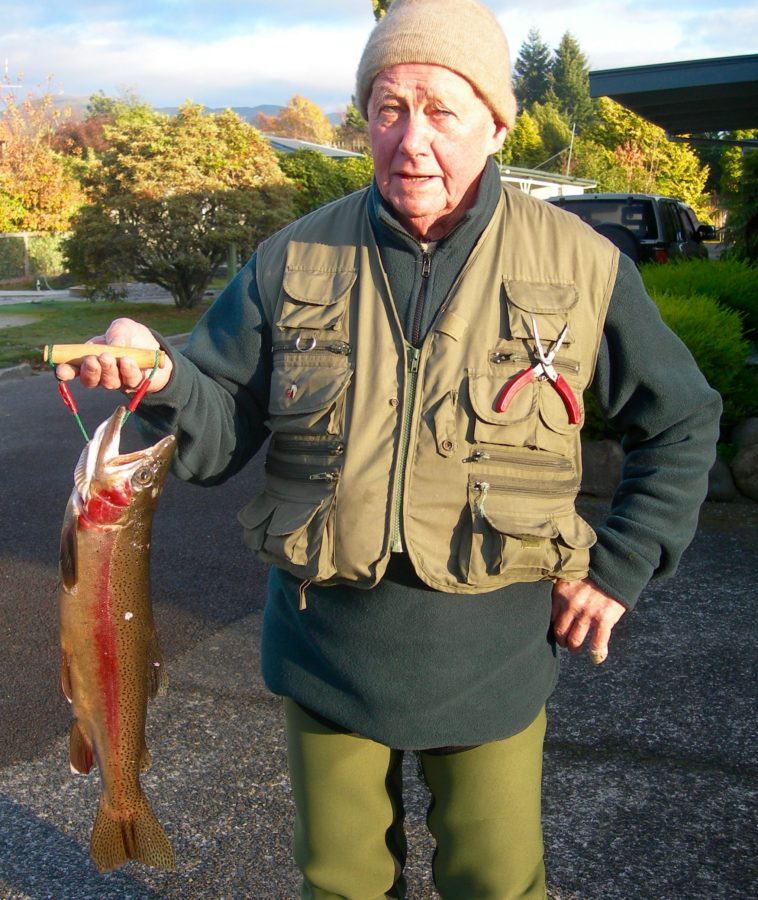
Last, following advice from a 76 year old youngster from Taupo Fishing Club:
Taupo fishing with limited mobility
Yorkshireman Doug Oldfield was 34 when he learned it wasn’t a lingering bout of influenza that was making him feel exhausted. He had rheumatoid arthritis and would, according to his medical specialist, need to give up work and most physical activity.
It was a frightening prospect for the fit young mining engineer and father of two, facing mortgage payments, immediate hip replacement surgery and a lifetime of pain and disability.
More than four decades and multiple surgeries later, Doug is a content Taupō resident who has refused to let his diagnosis stand in the way of work or play. Or fishing.
With the help of newfound friends at Taupō Fishing Club, the 76-year-old retiree has discovered a host of fly fishing spots he can easily access a short drive from his adopted town. He is also tying flies and has picked up a paintbrush to recreate watercolour renditions of the trout he seeks.
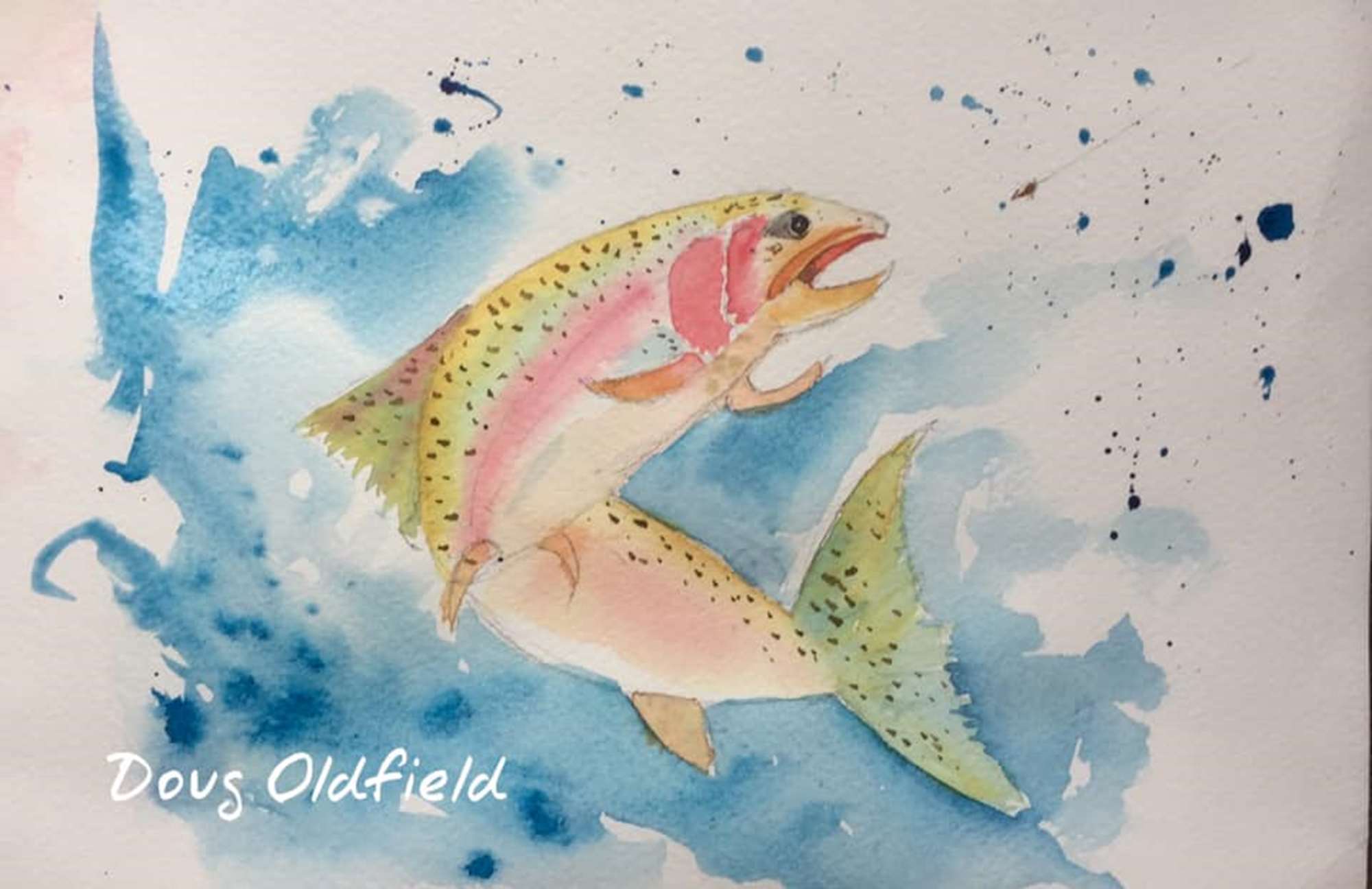
While his wife Janet is not an angler, she heads the fishing club’s environmental arm and helps trap predators around local waterways. Thanks to respiratory issues, shoulder surgery, two knee and five hip replacements, Doug’s mobility is limited and his balance can be poor. Steep tracks are difficult, standing in fast-flowing water is dangerous, long hikes are out of the question. But a quiet amble alongside a river is both doable and pleasurable, always with a fishing buddy close by to offer an arm or shoulder if required. He is still finding suitable new haunts.
Safe places
“For people like me, with mobility issues, the lifestyle I can enjoy here is fantastic really,” he says. “I have to be mindful of my limitations but the beauty of Taupō and the river system is there are a lot of places I can go and fish and I’m safe.
“When I was living in the north of England, I didn’t river fish at all because it was very challenging to get into a lot of the rivers. You’ve got to walk a long way to get to the river, then you might have to climb down banks. Here, I have the Waitahanui River, the Tongariro River, the Hinemaiaia River.”
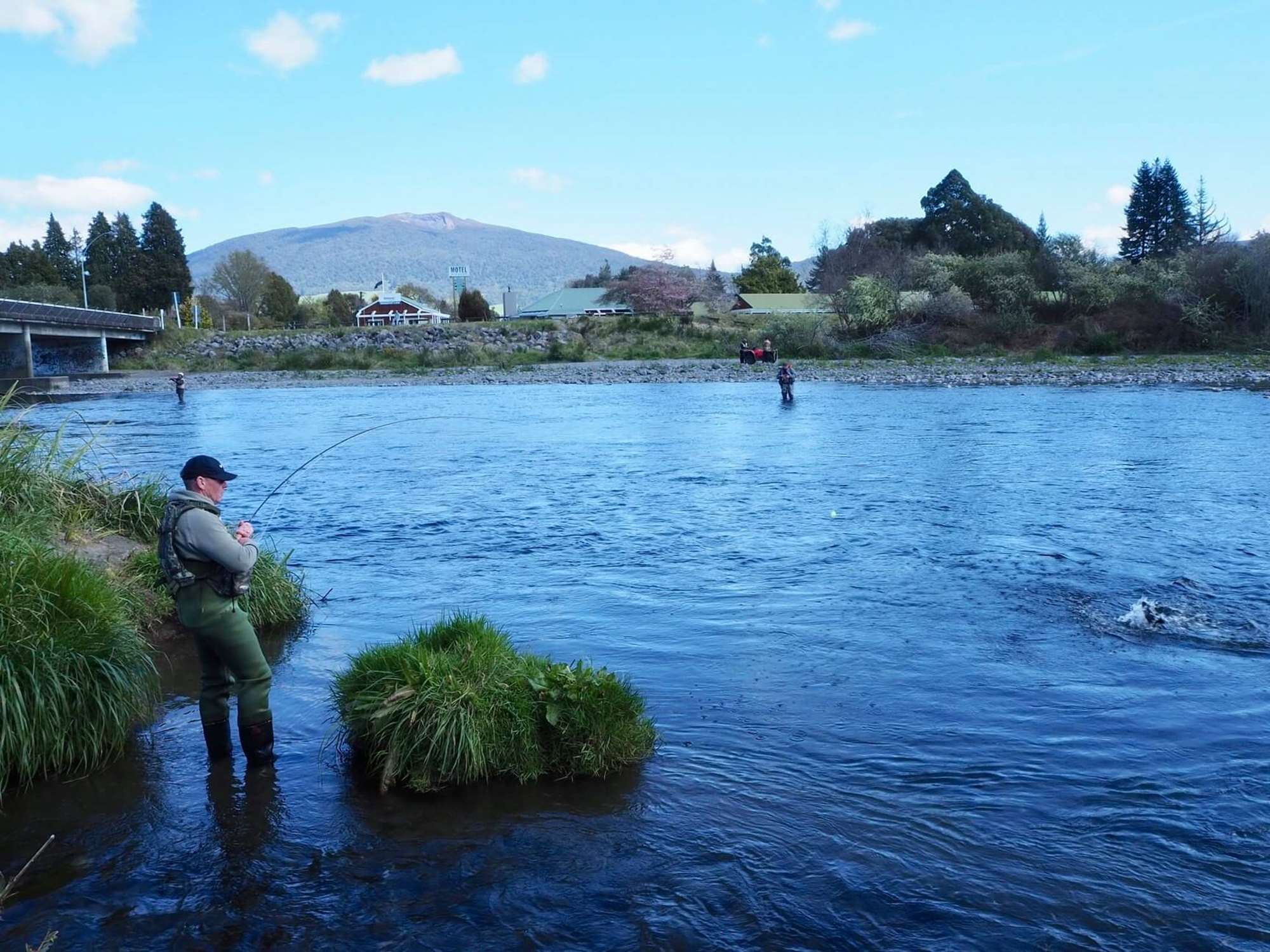
Club president Shirley Fraser and her friends have shown him the spots where car parking is close and river access is easy, with options to fish in water that is perhaps only shin-deep.
River mouths are usually quite good. At Hatepe, I can fish where the river comes into the lake because a lot of fish congregate there and I can sort of wade up there, where it’s still only up to your knees, for the fish coming up the river to spawn.
He is careful about where he goes, when and who with. He will steer clear of rivers that are flowing too quickly and only accompany people prepared to walk at his pace.
“The club’s been very good for that, I’ve found plenty of fishing partners and it’s easy to arrange and go. And someone is there if I need help. If I catch a fish, they can help me net it; I can’t kneel down and I don’t want to be bending over if the river is running fast because I haven’t got that stability.”
No planning required
Back in England, Doug tried charter boat ocean fishing but found it too tough on his joints. Loch-style fishing by boat can be expensive and required advance bookings that did not account for weather conditions or spontaneity.
Not like here, where I can decide the weather’s nice and I haven’t been fishing for ages. I can be at the cliff pool at 7am, up the Waitahanui. And back here at 9am. Within half an hour of deciding to go, I’m on the river. I don’t have to plan here.Doug
By the time Doug retired after 27 years in a sales management role with Pall Corporation, both the couple’s children were living in the southern hemisphere. After visiting their son and his family in New Zealand several times, the Oldfields decided to emigrate. By August 2016, they were visa holders living in Taupō, on their way to permanent residency.
“This place is fantastic for someone with my issues. I can’t imagine a better place to be. We’ve got some really nice neighbours, a nice view of the lake, you don’t have to queue to get onto the road. It reminds us a lot of Scotland and the Yorkshire Dales, all this countryside and freedom without people being everywhere. We just love it.
“I just think I’m so lucky. I’ve had these things, physically, with my body, but I’ve never had the attitude of ‘why me’. I just feel as though I’m very fortunate to be here.
“Like this morning, I just had a couple of hours on the river and I wasn’t bothered whether I caught a fish or not. The birds are singing in the trees, the river is flowing nice and clear, you’re out in nature. And you can go swimming in the lake if it’s a nice warm evening. Fabulous, isn’t it? It keeps you young as well.”
Nature’s gift to the less mobile
Department of Conservation’s Taupō fishery manager Dave Conley says the region offers a vast range of opportunities for anglers, including options for people who have mobility limitations.
“Just by virtue of what nature has given us, there really is something for everyone here,” Dave says.
“We have backcountry fishing for people who are really keen and adventurous, where you basically make your own path, right through to areas where you basically drive a car right to the stream. That kind of access is quite common here, right around the lake. We also have jetties and wharves and boat ramps on the lake edge that provide choices with a reasonable chance of success, not just token fishing opportunities.”
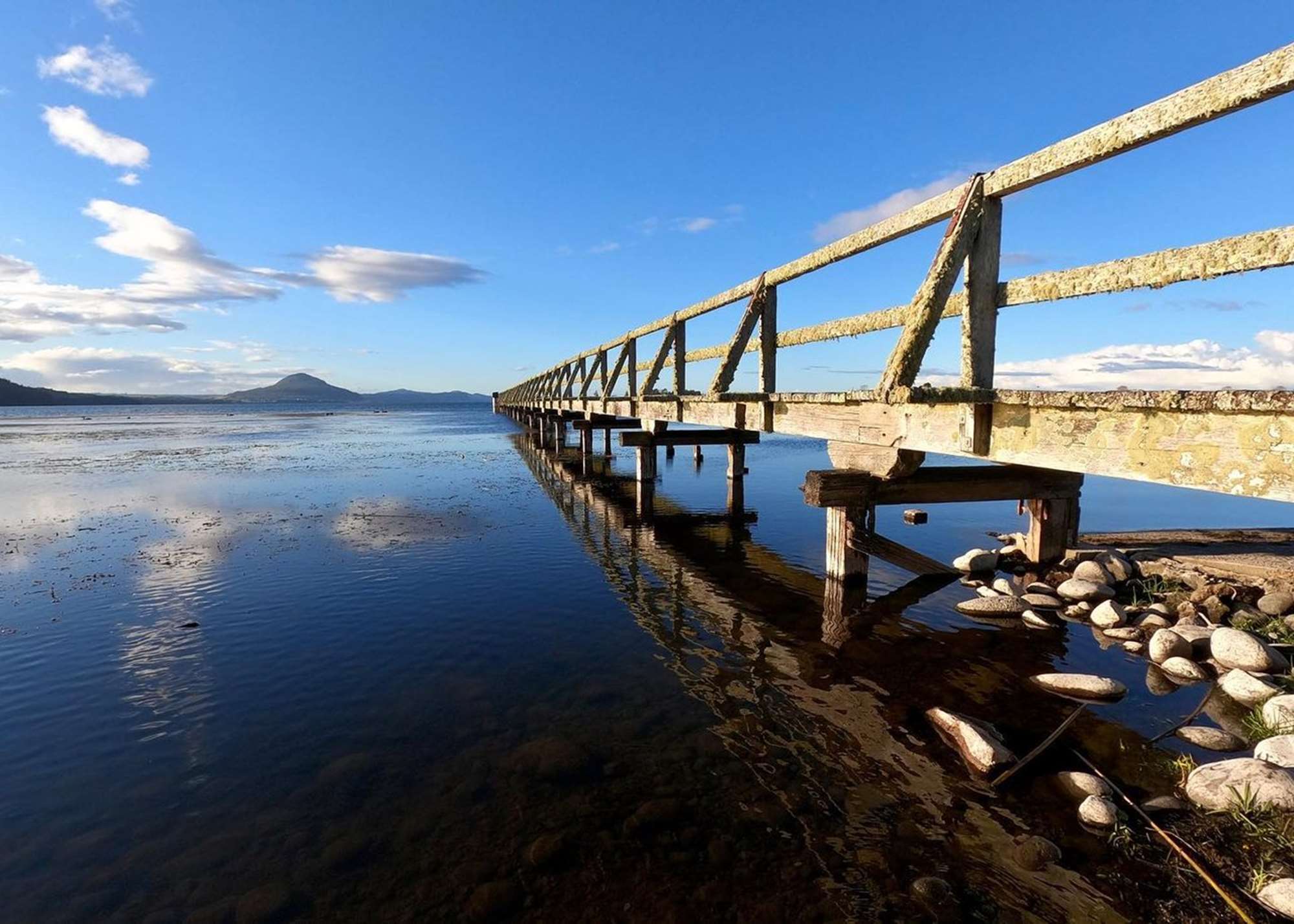
He recommends the Tokaanu Historic Wharf as a respected fishing spot with good accessibility. (This has since been closed off) The Two Mile Bay jetty is another well-loved spot. Several stream mouths offer excellent vehicle access, with carparks that are close enough to the river, with flat enough tracks to accommodate mobility vehicles.
Fish with a friend
However, Dave echoes Doug’s warning that anyone with mobility issues should fish with a guide, a competent friend or a Taupō Fishing Club member.
It’s not just the ability to get you to the water, it’s the ability to get up and out in the event that something untoward happens. Moving water carries with it an inherent risk and my advice is to never go without someone who can help you manage.Dave
“It is the inexperienced who are most at risk but even an experienced angler can still find themselves in a tricky position. We have unfortunately lost anglers of all abilities at these places. They suffer a medical or health event, or just a fall. There is risk with every step, that’s the nature of the outdoors.”
Dave’s area of responsibility includes the fishery in Lake Taupō and several smaller lakes, as well as tributaries flowing into them.
“There is a huge array. And the rivers themselves change in size and temperament, from big, boisterous rocky areas that are quite difficult to access, to rivers like the Waitahanui which tends to have very gentle, consistent flows.”
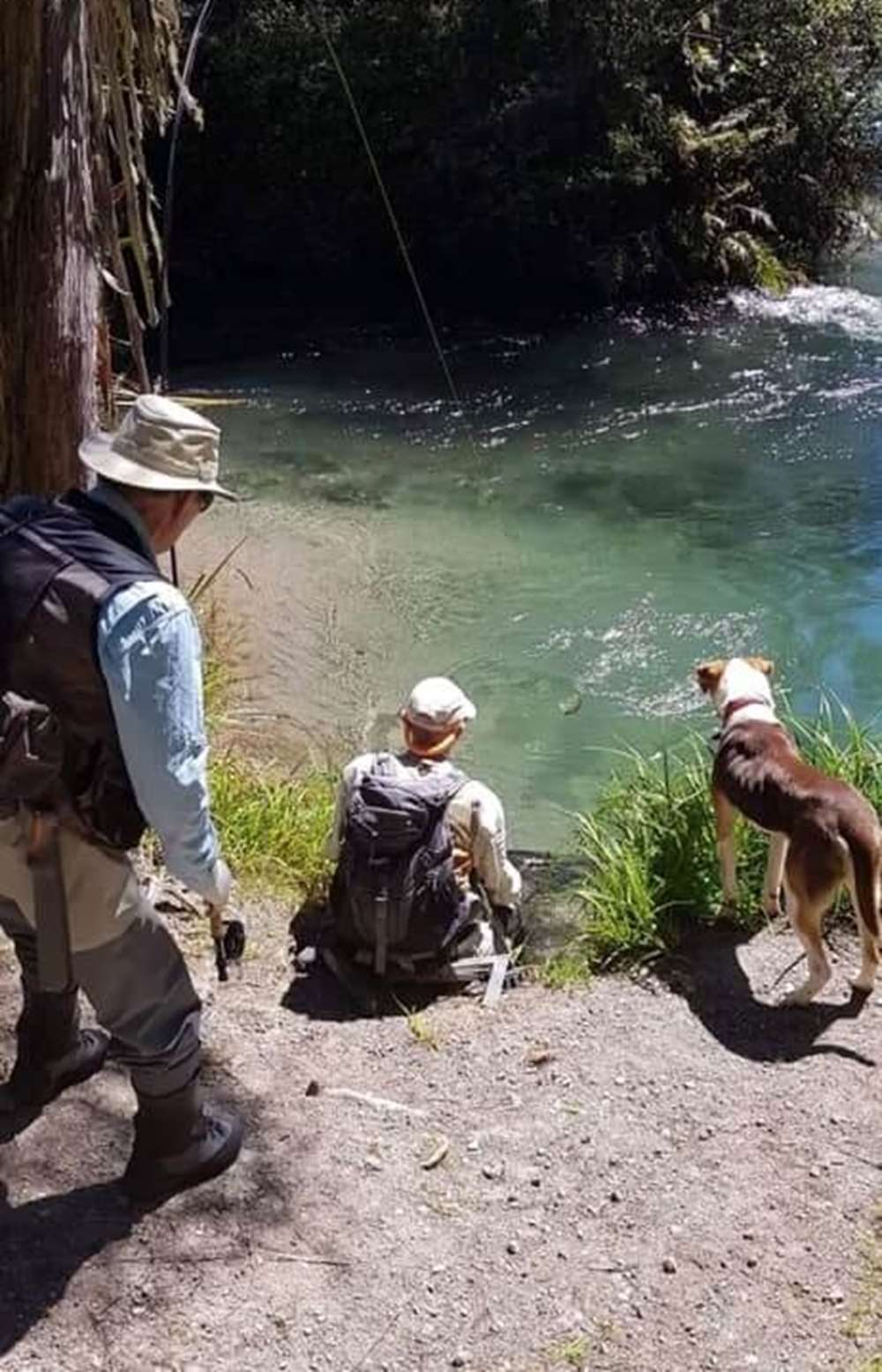
Taupo fishing with limited mobility – Doug’s tips
1. I would not advise anyone with mobility issues to venture out without a fishing buddy or a guide until you are familiar with the terrain. The river can be a dangerous place and is constantly changing.
2. The best advice I can give is to join Taupō Fishing Club – they are so willing to take members to accessible spots. The club also runs regular courses for beginners – both men and women – and it has rods and reels and other gear so there is no need to have all the equipment beforehand. The courses includes:
- casting tuition
- set-up
- various methods of fly fishing
- a trip to the river to put it all into practice
3. Anyone needing a guide can call in at any of the fishing tackle shops such as Taupō Rod & Tackle or Sporting Life Turangi and ask for recommendations.
4. The Waitahanui River is spring-fed and is super clear, so when you’re nymphing don’t get in the water unless you have to. The fish can sense the vibrations and will spook, don’t get in front of the fish, don’t let your fly line go over them, and splash in the water. So a long leader and a small indicator are called for. The Waitahanui is also very good for Euro nymphing; be prepared to add removable split shot to get down quickly in the deeper parts of the river.
5. If you’re going into the water, wear waders with a good belt. In my opinion, a wading stick is essential. I find a net with a long handle or extending handle helps to net the fish and minimise handling, especially if you have mobility issues. Better still, ask your fishing buddy to net the fish.
6. For most situations, a #5 or #6 weight 9ft rod and a floating line is all you require. Euro nymphing is a totally different setup. However, if you’re fishing the Tongariro River you may have to beef things up, especially if you’re wet lining and use a sinking line.
SWMBO’s new consultant, AI, the expert on everything, advises:
Fly fishing for the elderly is a rewarding, low-impact, and therapeutic activity that promotes mental sharpness and physical health through the relaxing, rhythmic act of casting. To ensure safety, focus on fishing with a buddy or guide, use wading sticks for stability, and prefer calmer water or boat fishing to navigate mobility limitations.