
DOC takes action to improve enjoyment of the Tongariro Alpine Crossing
 (Images from TRM library)
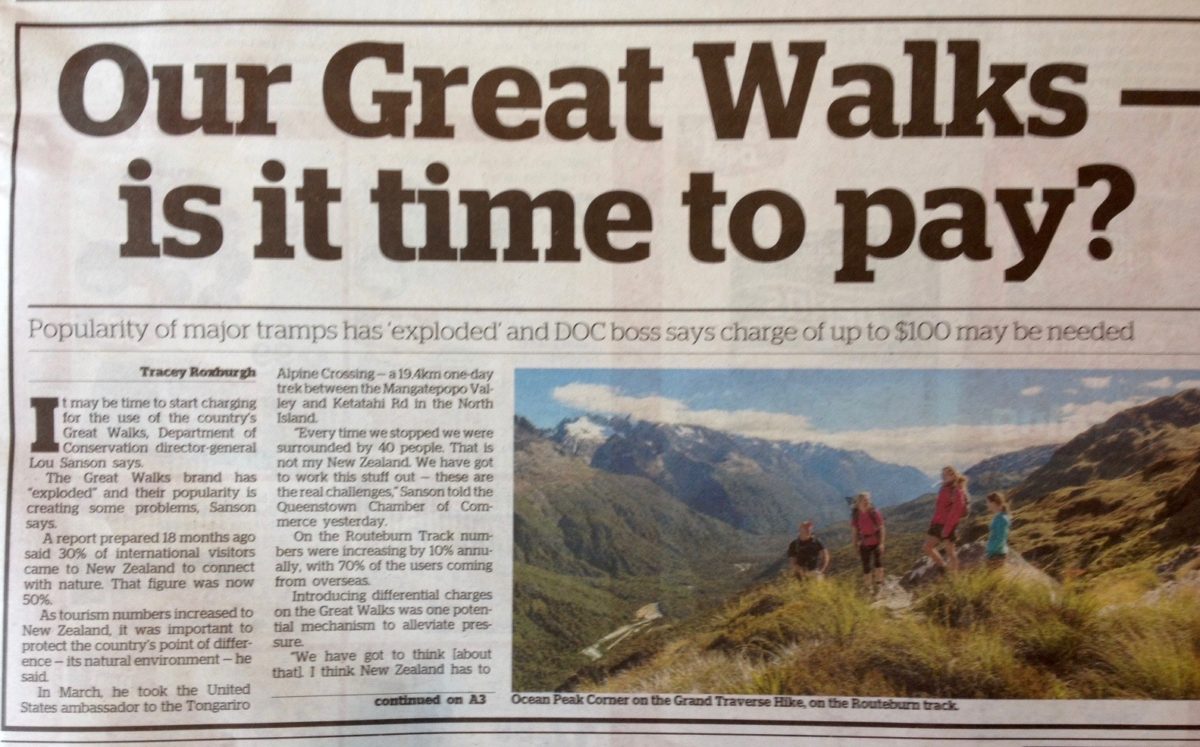
People planning to hike the Tongariro Alpine Crossing this summer are urged to use a range of shuttle services.
Vehicle crowding at both ends of the Tongariro Alpine Crossing has adversely impacted on people’s enjoyment of this world famous day hike.
DOC has worked closely with concessionaires and local iwi to improve the experience for all visitors.
 People planning to hike the Tongariro Alpine Crossing this summer are urged to use a range of shuttle services from the local towns around Tongariro National Park.
The suggestion is being made because parking restrictions will be in place at both road-ends of the track and the shuttle services will provide safe and easy access to the popular one-day hike.
Changes this summer season, between Labour Weekend (21 October 2017) and 30 April 2018 include a four-hour time-restriction for private vehicles at the Mangatepopo Road-end. This gives visitors time to enjoy short walks, but people wanting to do the entire hike, which takes an average of six to eight hours to complete, will need to use shuttle transport.
 DOC recommends using shuttle services to access the start and to get picked up. The shuttle services operate from Whakapapa, National Park Village, Turangi, Taupo, Ohakune and Raetihi. Shuttles take visitors to the start, at Mangatepopo Road-end and pick them at the end of the hike from Ketetahi Road-end. Information on all approved operators is available from the i-sites around the region and on the DOC website.
 Developing a stronger appreciation of the cultural and environmental values of Tongariro National Park, a dual World Heritage Area, is also on the agenda.
Local kaumātua, Te Ngaehe Wanikau, explains: “The mountain peaks and all waterways on Tongariro and his peaks, Ngauruhoe and Ruapehu, are sacred to the local hapū Ngāti Hikairo Ki Tongariro”
Mr Wanikau asks visitors to the area to keep their own safety and wellbeing paramount and also to respect the sanctity of the maunga tapu (sacred mountains) by not touching or entering any of the waterways, including the alpine lakes.
 “Ngāti Hikairo ki Tongariro places extreme importance on their guardian role in protecting not only Tongariro and his peaks, but also the safety and wellbeing of visitors to the region,” he says.
DOC is removing access signs to the peaks and visitors are asked to stay to the marked and formed tracks. This summer there will be additional toilets in place on the hike and people are encouraged to use them as defecating on the tracks or in the alpine vegetation off track is unacceptable, offensive and a human health hazard.
 DOC also reminds people that drones are not allowed be used in the park. Tongariro Alpine Crossing is unique and a special journey, so leave your drones at home and let other walkers enjoy their experience.
“This summer expect to see more conservation rangers at the beginning of the track and on the track to share these important messages with our visitors,” says Bhrent Guy, Operations Manager.
Book at shuttle through the i-site network – Turangi i-site 0800 288 726
DOC ‘nobbled’ by previous govt – environmental lawyer
Conservation Minister Eugenie Sage is vowing to restore DOC’s ability to advocate for the environment, saying political pressure and a lack of funding from the previous government has prevented it from speaking out.

Abel Tasman native bush. Photo: RNZ / Tracy Neal
The Department of Conservation (DOC) has come under fire in recent years for its limited input into developments affecting the environment; in 2013 it discarded a 50-page draft submission on the Ruataniwha Dam in favour of just a few lines.
Earlier this year the department made a neutral submission on a proposed coal mine at Mt Te Kuha near Westport, despite its own expert evidence saying the site was home to at-risk flora and fauna.
Ms Sage said one of the department’s legal functions was to advocate for the environment, but it hadn’t been doing so because it had been starved of resources.
She said the previous government had also given a strong impression that it didn’t want DOC advocating on bioversity issues because it created conflict with development interests.
“The department needs to have a strategy for advocacy, and it needs to step up its advocacy work because we have a biodiversity crisis.”
Ms Sage said the Green’s confidence and supply agreement with Labour allowed for a significant increase in DOC funding, but just how much won’t be known until next year’s Budget.
Environmental Defence Society CEO Gary Taylor said it was time to revamp DOC’s advocacy around resource management processes.
He was hopeful the political interference seen under the previous government would stop.
“There was sort of winks and nods as to the extent to which they should not get involved in some of the cases the government had set its heart on – that was inappropriate.”
Environmental lawyer Simon Berry said DOC had been ‘nobbled’ by the previous government.
He said developers and the agriculture sector could be frustrated if DOC became more involved in resource management hearings, which could then spark debate about the time taken for RMA processes.
“They can add cost, they can add time, but it’s a question of weighing up whether the interests they’re seeking to protect, in terms of conservation interests, are worth that.”