
The incidence of elderly anglers calling in to TRM for a chat, to romance about “the Tongariro that was”, has steadily increased lately. I thought it would die off as they died off. But no, they are living and fishing longer, while panicking as the river environment continues a steady decline and the “powers that be” continue to ignore the issues. They knew how good it used to be and want us to know too.
The loss of trout rivers in the South Island is evidence. One genuinely concerned old fisho reminded me of a report from TRM over nine years ago and asking why nothing has changed… So we repeat it to show the anger in the Crown’s lack of responsibility to the environment is still out there, alive and well. So it should be! In this new ‘greenies age” of concern over the loss of our natural environment, it is inexcusable.
So we repeat the 2017 report (for GS), plus a real doozie out of the great USA as an example of a $BILLION for compensation now recognised to try to fix their rivers before it is too late. Can the Tongariro River ever be restored before the natural, clean, healthy river environment deteriorates beyond help? Easy! But it will need to be very soon… How? Perhaps if the new land owners, Tuwharetoa, also take it on board. Watch this space…
The Tongariro River – our disappearing heritage?

This is TRM’s third blog on river and lake water quality issues.
On Tuesday we posted a thoughtful warning on the loss of traditional recreational and fishing places such as Lake Tutira and the Selwyn River.
On Wednesday we tried to provide some balance with stories of restoration of a few threatened waterways.
But today is the biggie… Perhaps by far the most telling of all? Over fifty years ago the Government decided to place at risk the greatest trout fishing river in the world – the mighty Tongariro.
So the following is a repeat of protests using a fifty-year old article warning of our disappearing heritage, produced in New Zealand Outdoor magazine in July 1964 (cost – two shillings).
The article commenced with the usual rave to get our attention – about fishing for half an hour, hooking nine fish of which five were landed and killed, you know the style, then the well known subscriber (who wrote under the name of “Matuku”) launched into the point of the article asking “What fate now awaits the Tongariro as an anglers river?”
The following are brief extracts:
“…one thing is sure. Whether we like it or not, the Tongariro is doomed….”
After criticising and accusing the Government Departments involved of “fobbing off anglers with platitudes that mean nothing and procrastination and on occasions downright lies” it went on to “safely predict that the Tongariro will be dammed and will become another manipulated gutter in the hands of the NZ Electricity Department.”

The reasons were specified including the greatly reduced flow will result in a reduction in spawning, insect life reduced, and a complete lack of faith in the authorities maintaining the flow rate when the threat of power cuts was looming the river would be reduced to a trickle, etc. with the Waikato manipulation used as a precedent when the fishing from Taupo to Mihi was ruined.

The article also suggested the alluvial sediment would cover the clean gravels needed for spawning beds, criticised the lack of any provision for fish ladders, erosion, pollution and silting problems were considered inevitable, plus all the little problems that arise when the natural rhythm of a river is broken.
The Government promises of improvements such as a proposed boat marina at the southern end of the lake at Tokaanu were considered a sop to allow them to sell their principles, etc. The development of other “sops” like the Turangi golf course was not mentioned.

A “Hands off the Tongariro Association” was formed led by Peter McIntyre sending broadsides – describing the powers that be as Rampaging Philistines and receiving “epithets cast in scathing tones”. (Peter McIntyre was a well-known artist who retired to Kakahi and led the protest to save the Whakapapa from becoming, quote: “another manipulated gutter in the hands of the NZ Electricity Department”.) Remember, this was in 1964!
Doom and gloom was forecast. All scary stuff for freshwater anglers. OK?
The proposal was a NZ sized version of the Snowy Mountain hydro electricity scheme to harness hydro energy by redirecting several famous trout fishing rivers through the proposed Tokaanu Power Station turbines and eight more power stations down the Waikato to the north. The ambitious scheme was to collect run off from both sides of the Tongariro National Park and redirect streams and rivers such as Moawhango and Whakapapa through tunnels (and even an underground power station) and canals via Lake Rotoaira to Lake Taupo which would increase capacity by about 20%. (Don’t quote me – I’m guessing)

Any loss of Tongariro fishing waters would be partially compensated by damming a shallow swamp at the head of the W(h?)anganui River (it didn’t have an h back then) and flooding a big puddle into Lake Otamangakau collecting water via a tunnel from the Whakapapa which was also under threat by the development.
Any possible economic benefits such as twenty plus years of employment opportunities from the development and a new town to be built alongside the cute little fishing village of Taupahi was not mentioned or considered. Back then, like every other angler, I subscribed in the NZ Outdoor magazine and devoured all the doom and gloom projections from such critics who described it as the end of the world…

The new town was to be called Turangi. Now after over fifty years later… back to reality? Was it worth it?
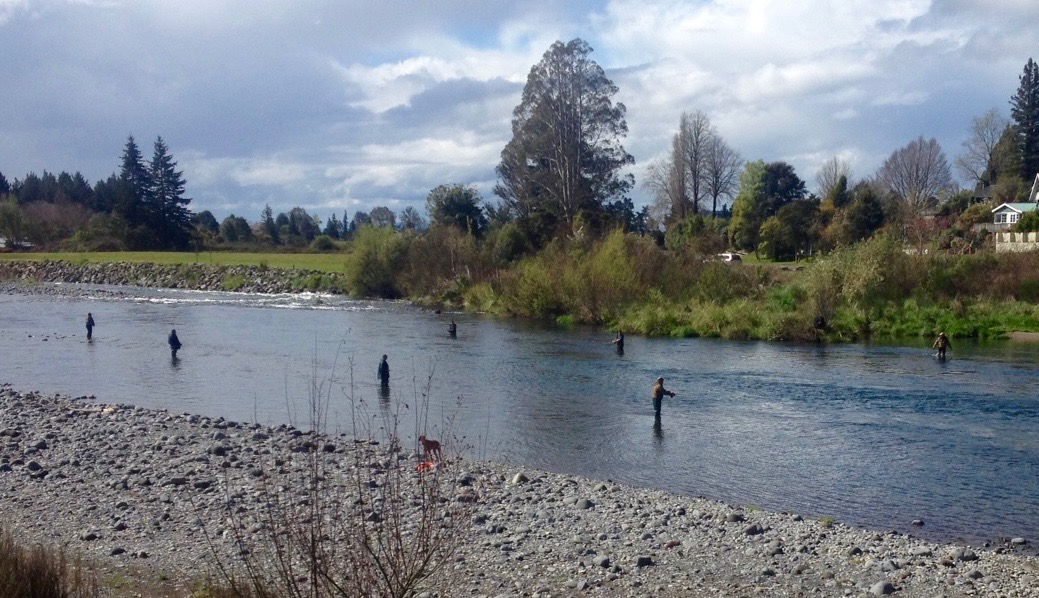
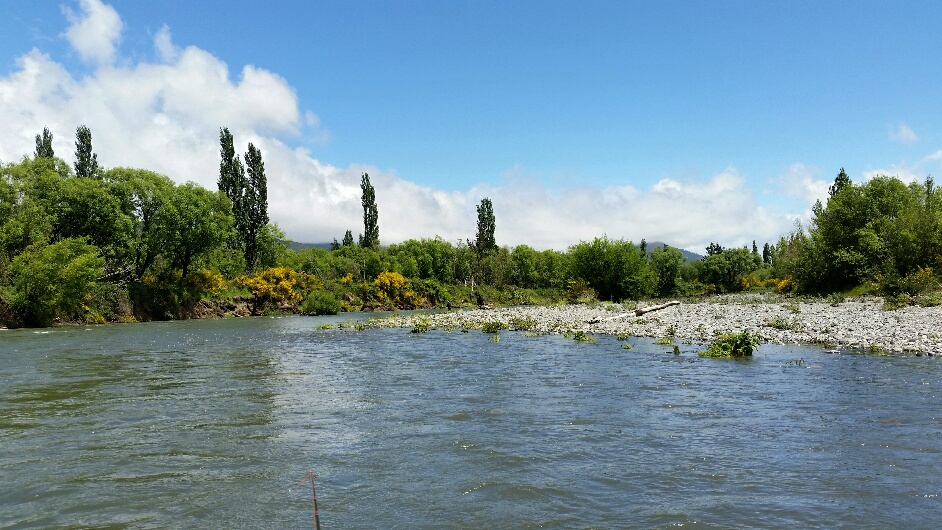
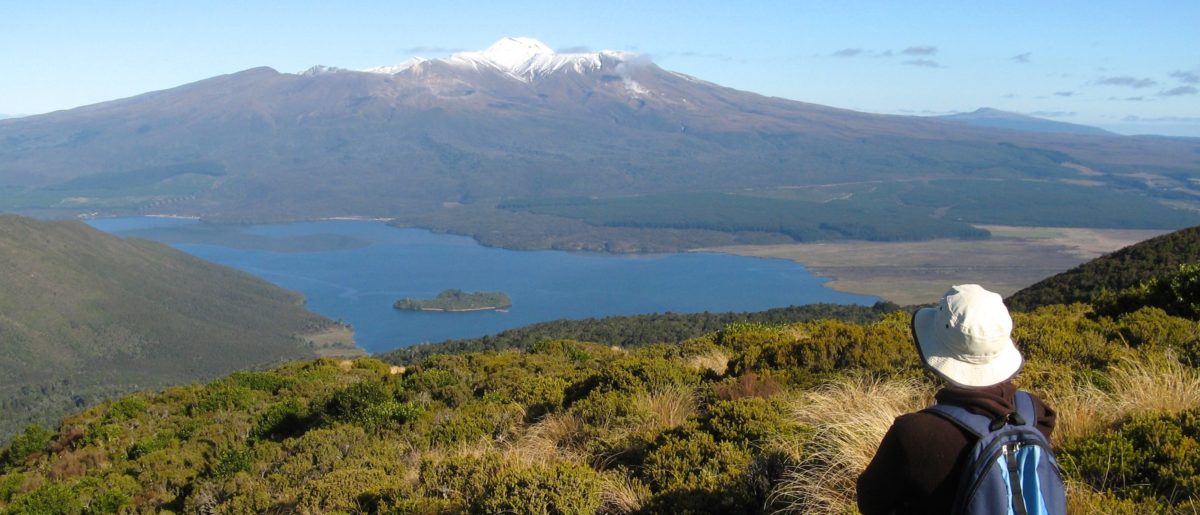
Sometimes we have to swallow hard and admit we do live in a little slice of heaven? The evidence is in the images.

Compulsory reading for all Tongariro junkies:
Seattle spent years misleading the public about Skagit River salmon. Now it will pay $1 billion for fish passageFor years, Seattle City Light insisted its hydroelectric dams on the Skagit River were not harming salmon.
SKAGIT COUNTY, Wash. — In a stunning reversal, Seattle City Light has agreed to invest $979 million to build fish passage at its three Skagit River dams, a commitment its own scientists long insisted was unnecessary.
It’s also a victory for two tribes of the Skagit Valley who never stopped fighting.
For years, Seattle City Light insisted its hydroelectric dams on the Skagit River were not harming salmon. The fish, city scientists argued, never historically reached those stretches of the river. The rugged North Cascades terrain made it a moot point — the science was settled.
The science, it turned out, was not settled.
In a years-long investigation by the KING 5 Investigators, reporters exposed that scientists from all over the Northwest thought the science was flawed, including representatives from U.S. Fish and Wildlife, NOAA Fisheries, the Washington State Department of Fish and Wildlife, the National Park Service, the Upper Skagit Indian Tribe, the Sauk-Suiattle Indian Tribe and the Swinomish Indian Tribe. The only scientists claiming Seattle City Light’s dams didn’t hurt fish worked for Seattle City Light.
Now, the utility is preparing to pay nearly $1 billion that signals a reckoning. The city will pay that hefty tab to build a highly technical system – referred to as fish passage – to move salmon around the three dams on the Skagit.
The landmark settlement, formally announced on March 5, shows the city has agreed to design and construct fish passage at all three of its Skagit River dams — Ross, Diablo, and Gorge — reconnecting miles of habitat severed from migrating salmon for nearly a century.
“This collaborative settlement reflects historic Tribal partnerships, environmental investments, and shared commitment to Skagit River watershed stewardship,” wrote Jenn Strang, Seattle City Light media relations manager, in an email.
For tribes who have fought this battle, it is long-overdue vindication.
“We’re relieved,” said Scott Schuyler, tribal elder and Natural and Cultural Resources policy representative for the Upper Skagit Indian Tribe, headquartered in Sedro Woolley.
“Upper Skagit was driven by the will of our ancestors to right (these) historical wrongs, to free our river and fish, and bring honor to our ancestors. The Upper Skagit have paid a steep cost for this massive hydroelectric project, which was built on our home and lands that are sacred.”
The Skagit is the largest river in western Washington. It drains the North Cascades, cuts through some of the wildest terrain in the lower 48 states, and empties into Puget Sound carrying all five species of Pacific salmon. For Northwest tribes, it has been a source of food, culture, and identity for thousands of years.
For Seattle, it became a source of relatively cheap power.
Beginning in the 1920s, the city built the dams that produce roughly 20% of Seattle City Light’s electricity and help keep the city’s rates among the lowest of any major American city.
The dams also cut off roughly 40% of the Skagit River’s habitat from migrating fish. By the time the federal government began the process of reissuing the dams’ operating license in the 2010s, bull trout, steelhead, and Chinook salmon connected to the Skagit system had all been listed under the Endangered Species Act. Chinook are the primary food source for the endangered Southern Resident orca — a population whose decline has prompted alarm from scientists, activists, and the public alike.
For generations, members of the Upper Skagit Tribe hauled in abundant salmon from the Skagit. Today, with wild salmon populations so depleted, many rarely get the chance to fish for them at all. Tribal and natural resource scientists from around the region believe dams on the Skagit have contributed to the steep decline.
Under federal law, dam operators must assess whether their projects harm fish. If so, operators must take steps to address it. Fish passage is the most direct such step. The question of whether Seattle’s Skagit dams required it would consume the better part of a decade.
The science Seattle used and ignored
Seattle City Light’s position, held for years with remarkable consistency, was that fish passage was unnecessary because salmon never historically reached the upper Skagit above its dams. The argument had a certain intuitive logic: the terrain is steep, the canyon is rugged, the river drops sharply. Salmon never got that far.
To support the claim, the utility leaned on older studies — one dating back a century — that included interviews with early homesteaders and observations of steep rapids thought to block fish migration. City Light scientists defended the research as valid historical evidence that species like salmon and steelhead that migrate between rivers and the sea, were not native to the upper river.
Tribal biologists and federal agency scientists said the research was outdated, incomplete, and wrong.
“It’s old. It’s not true,” said Jon-Paul Shannahan, a biologist for the Upper Skagit Tribe, describing the city’s science in 2021.
The fish that changed everything
Then came the video
In 2019, government and tribal researchers recorded footage of a Chinook salmon spawning in a section of river that was, by the city’s own account, essentially inaccessible to fish — a stretch that Seattle City Light dewaters by diverting flows through a power tunnel.
At a time when water was let into that stretch, tribal biologists found Chinook made their way there anyway.
“It was huge,” Shannahan said at the time. “A complete game changer.”
The discovery did not immediately end the dispute, but it fundamentally undermined the city’s central argument. If salmon were spawning in a stretch of river that, according to City Light’s own science they had never historically used, the entire basis for resisting fish passage began to collapse.
Over the following years, federal agencies and tribes documented additional instances of salmon and steelhead appearing in places the utility’s research suggested they could not reach.
The $1 billion reckoning
The settlement now on the table is sweeping in both scope and cost.
The full package of environmental measures tied to the relicensing — including habitat restoration, water quality improvements, flow modifications, and long-term monitoring — is estimated at approximately $3.8 billion over the 50-year license term. Fish passage is by far the largest single-line item.
The agreement was reached after years of formal negotiations involving the Upper Skagit, Sauk-Suiattle, Swinomish, and Lummi tribes; the National Marine Fisheries Service; the U.S. Fish and Wildlife Service; the Washington Department of Fish and Wildlife; and a range of other federal, state, and local stakeholders, including Skagit County government representatives who advocated for fish passage from the beginning of the talks.
“We look forward to Seattle City Light implementing fish passage in good faith,” said Skagit County Commissioner Peter Browning. “The financial settlement is commensurate with what other hydro operators around the region have spent, so we see this settlement as long-overdue environmental justice and regional equity.”
It must still be approved by federal regulators before taking effect.
Seattle City Light has not issued a public statement on the settlement ahead of the official announcement.
City Light serves roughly 460,000 residential and business customers in the Seattle area. What the relicensing commitments mean for electricity rates over the coming decades has not yet been fully detailed publicly.
The fish passage infrastructure itself — ladders, lifts, or other systems capable of moving salmon past dams that rise hundreds of feet above the river — will be among the most complex engineering challenges ever undertaken on a Pacific Northwest river. Design and permitting alone will take years. Construction will take more.
“When the day arrives that the Upper Skagit can see the river to its banks and the fish return, it will feel like finally seeing a long-lost relative you never knew, but always felt the emptiness in your heart because they weren’t there,” said Schuyler of the Upper Skagit Tribe.
Susannah Frame is the news director at KING 5. Previously ,she was the station’s chief investigative reporter. Her series “Skagit: River of Light and Loss” documented the scientific disputes and tribal fight behind this relicensing battle over several years.