
Bill’s scenic history tour:

Now the weather is warming up for summer, now for something special – a tourist trip that is unique to Turangi. Every little tourist town is looking for its own unique competitive edge to attract tourists. Finally, a local fishing guide has seen the light! There is so much cultural history in the southern Lake Taupo region that needs to be promoted and now finally someone is specialising in tours. Bill Grace’s Local History Tours needs to be added to every tourist’s bucket list (more suitable in summer weather!).

Bill’s fascinating family history absolutely qualifies him – his ancestor established the first mission in the southern end of Lake Taupo over 150 years ago. The Grace Family are synonymous with the historic farming and development of Turangi and Tokaanu.

Just to prep you with some of his famous family background – without wanting to steal Bill’s thunder…
Thomas Grace offered himself to the Church Missionary Society in 1844 and sailed for New Zealand on 11 February 1850 on the Fairy Queen, with his wife and two children, and arrived in Auckland on 9 July 1850. It was intended that he should establish a new station at Taupō, but as the Reverend William Williams was abroad, he was diverted to Tūranga, Poverty Bay, where he stayed from October 1850 to the end of 1853.

Then the CMS requested Grace to proceed with the establishment of a mission station at Taupō. On preliminary expeditions in 1853 and 1854 Grace selected Pūkawa as the most suitable site. Seventy acres were set aside under the mana of the great Ngāti Tūwharetoa leader Iwikau Te Heuheu Tūkino III. When this offended a rival Māori leader, Te Herekiekie, Grace was able to use the occasion to bring about a reconciliation. The Grace family arrived at the station on 19 April 1855, after a slow and arduous journey from the east coast. The final stage from Tarawera took almost eight weeks and required large parties of Māori to carry baggage.
Grace’s expectations were high. Initially he was critical of the state of Christianity at Taupō and the quality of teaching, but gradually his reports became more favourable. His work was interrupted when on 24 May 1856 the first raupō mission house was burnt, together with many possessions. This was a temporary setback. The raupō dwelling was replaced by a substantial, two-storeyed mission house, and an industrial school, boarding school, cottages and other buildings were also established.

As the result of a great meeting of North Island tribes at Pūkawa in November 1856, Grace was again the subject of official complaints. Both Māori and Europeans alleged that he had encouraged, or even instigated, the King movement. Through the Colonial Office Donald McLean urged the CMS to remove him. They declined to act without reference back to New Zealand. Grace was able to rebut the charges and point to the opposition he had given to the movement, although he blamed government policy for the war in Taranaki. While Iwikau Te Heuheu Tūkino III, the protector of the mission, was still alive, the Taupō Māori stayed neutral, but later when Horonuku Te Heuheu Tūkino IV became leader, sections of the people sided with the Waikato tribes. The district became increasingly unsettled, and on 8 October 1863 the Grace family left Pūkawa.
Grace became one of the very few itinerant missionaries active among the Māori. Traveling from Auckland until 1872, and then from Tauranga, he journeyed repeatedly into the interior. On several occasions his life was threatened. Grace was with the Reverend C. S. Völkner at Ōpōtiki in March 1865. After Völkner had been killed by Pai Mārire followers, it was Grace’s turn to be interrogated. However, he was not closely guarded and after 16 days in captivity escaped to the naval ship Eclipse, which was standing offshore. He narrowly missed an encounter with Te Kooti in 1867 and was also saved from an ambush at Pūkawa, planned in revenge for Māori deaths at Rangiaowhia.
The establishment of the Māori church, the goal of the CMS, was a pressing concern for Grace. He made a strong case for a Māori bishop, but it was some 50 years before this position was created. His attempts to further Māori participation in the administration of church lands were rejected by the CMS. His plan for a school that would train a Māori élite to lead in the church and secular matters was not realised.
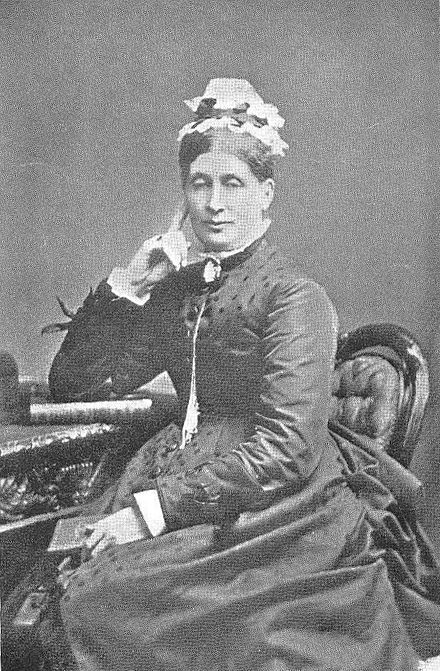
During a visit to England from June 1875 to late 1876 Grace gained the CMS’s support for the proposed reoccupation of Taupō. He hoped that his son, the Reverend T. S. Grace junior, would live there and extend his work into the King Country. However, Thomas Grace senior’s health failed and the long-cherished plan was not undertaken. He died on 30 April 1879 at Tauranga at 64 years of age.
Then there was Sir John Te Herekiekie Grace, 1905-1985…
John Te Herekiekie Grace was typical of a group of Māori leaders that emerged in the 1950s. They represented the second generation of well-connected men who prided themselves on their loyalty to the Crown and their support of the Anglican church and believed Māori could develop within the framework of existing conditions.

Two lines of descent were important to John Grace’s identity. The first was from the missionary Thomas Samuel Grace, who was recruited by Bishop George Augustus Selwyn in 1850. Grace appears to have had some sympathy for Māori society and culture and two of his sons married Māori women. The other important line was through Te Herekiekie of Tokaanu, a senior chief of Ngāti Tūwharetoa and leader of Ngāti Te Aho. His grand-daughter Rangiamohia married John Edward Grace, a sheepfarmer of Tokaanu and son of T. S. Grace. Their son, John Te Herekiekie Grace, was born on 28 July 1905 in Te Keepa Te Rangihiwinui’s (Major Kemp’s) house in Whanganui.

