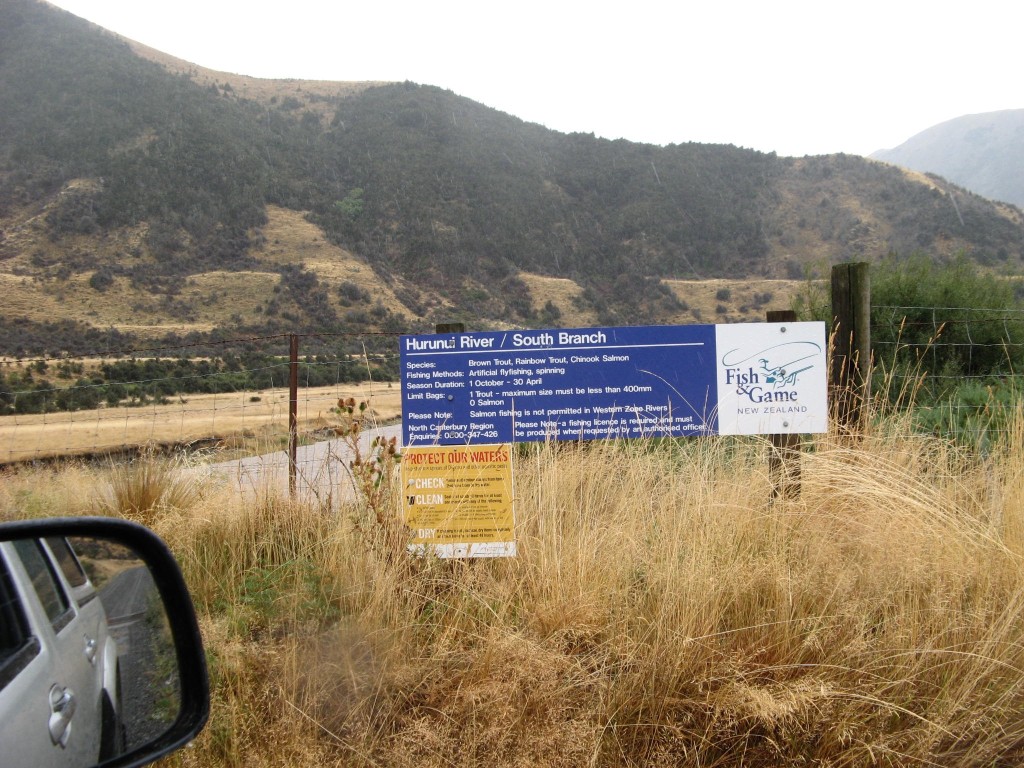
Opinion Piece by Ken Sims (photos from TRM library)
THE RIGHT TO KNOW, THE RIGHT TO SAY
by Ken Sims
Firstly, it is important to note that while this battle against carp farms may have been won, the war continues. There is the small matter of the existing farms in Nelson and the threats they pose, along with the ludicrously unsafe transportation of these fish around the country, based on the contentious and unproven assumption that it is ‘safe’. There is more yet to come on this issue, and if we are certain of anything, it is that someone somewhere is sooner or later going to have another crack at it. There are two other important lessons to take from this issue. Firstly, it got as far as it did, because it ‘flew under the radar’. Hello! The ‘scientific evidence’ for concluding that this was both |
|
But what about the other stakeholders in this project? Let’s start at the top and work |
both how out of touch and unconcerned they were with their constituents’ views. Finally, it was endorsed by Fish & Game NZ, an organisation entirely funded by hunters and anglers to protect the recreational fishery. Were their constituents even alerted or notified about this decision, let alone asked what they thought of it? No, they were not. Emerging Trend
This appears to be part of an emerging trend that can be seen in many other issues that directly affect anglers. Let’s do a quick, and by no means complete, roundup. Recently we were treated to the unseemly sight of Nick Smith swimming in the Manawatu River to celebrate a new action plan by the Manawatu River Leaders Accord. So were they celebrating the completion of the old plan? No, a lot of that had been put in the ‘too hard basket’, so a new plan was required. Has the overall water quality in the river improved? Not according to monitoring on the LAWA site. But surely, 98 environmental farm plans have been completed. True, but the majority of them don’t comply with either the One Plan or National Standards, and have been approved anyway. Of course, it would have been much more impressive if Nick Smith had swum below the PNCC sewage outfall, after the Regional and City Councils did a ‘sweetheart’ deal to circumvent the Environment Court and put off requiring the City Council to do something about it polluting the river. |
|
Canterbury Woes
The recent Choose Clean Water NZ campaign toured the country on a limited itinerary, talking to ordinary New Zealanders about their expectations and aspirations for our rivers and lakes. The overwhelming response was that (1) they expected rivers and lakes to be swimmable without making you ill, (2) they felt loss, anger and disempowerment over the current polluted and over- |
extracted state of our waterways, and (3) they felt ignored or threatened by the authorities that were supposed to protect our waterways, and the industries that were polluting them. The immediate, off-hand and dismissive response from Environment Minister Nick Smith to the suggestion of ‘swimmable’ waterways was that it was ‘impractical’.
Worsening Trend Given the trend, it is highly likely that the commercial exploitation and erosion of democracy will get worse. Much worse. What began with the first National reform of the RMA, which negated some environmental protections in favour of ‘economic development’, is set to be amplified by the second such reform currently before Parliament. The first has resulted in this ludicrous situation where regional authorities are trying to be both protector and exploiter of the environment, and forming private business companies that work in secrecy, are not accountable and which often advocate the opposite of what councils are trying to achieve. This favouring of business exploitation above environmental protection would be magnified under the second reform, giving Ministers widespread powers to override and direct Council decisions. We can see this sort of system already trialled in Canterbury. The proposal has already been criticised by Fish & Game NZ, the NZ Law Society and the Parliamentary Commissioner for the Environment. It is currently open for submissions. Have you had your say? With winter approaching, it is easy to see long dark shadows falling over our lands and waterways. |
But if Taupo teaches us anything, it is that even when regulation fails and consultation is ignored, you can still make a difference. If enough people stand up, shout and draw a line in the sand, saying ‘this is not acceptable to me’, they can be heard and listened to. But you have to be prepared to stand up and be held accountable for what you value and believe in. Don’t automatically assume that those you think should be representing your interests will be. The alternative is to bend over and take what you are given. |
Letter to the Editor
Dear Editor, Environment minister Nick Smith was asked recently in Palmerston North why the Government was not aiming for swimmable waterways. He responded that that “I do not think a legal requirement for every water body in New Zealand to be swimmable is practical.” In saying so he abdicates his environmental responsibility. Of course it isn’t practical with a weak, defeatist attitude like that, along with a strong bias to the government’s corporate bed-fellows in the dairying industry. Even Kiwi family farm dairy farmers generally abhor the corporate dairy structure and culture. And why did government do a state takeover of the formerly democratically elected Environment Canterbury? Simply to expedite |
water concessions of the public’s water. Not that it comes as any surprise. It was Environment Minister Smith just months ago who, along with cabinet colleague Amy Adams, legislated a lowering of water standards for rivers from “swimmable” to “fit for wading and boating.” Now you could wade in a cesspool in fishing waders and most certainly you could boat. Smith seems bereft of any environmental and ecological conscience. Because an ecosystem approach is vital, Smith should be tackling the problem by having river quality rated directly relative to the health of aquatic invertebrate populations. |
Tony Orman, Marlborough
(the letter above was originally written to the ‘Manawatu Standard’)
NZFFA Backs River Protection Calls
These calls were prompted by the announcement in mid-March that the government |
would provide a further $1.6 million worth of funding for three irrigation schemes. The call from the Tourism Export Council noted that New Zealand’s tourism could be harmed by continuing and increasing exploitation of rivers for irrigation while DoC warned that government plans to alter the Resource Management Act will cut the public’s rights to object to water exploitation. Statutory organisations with responsibilities for freshwater management, such as Fish & Game NZ, would also be affected. |
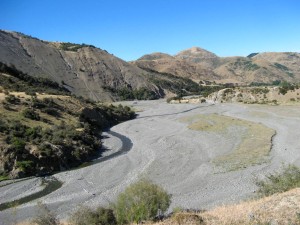
 Ken Sims, of the Manawatu, life member and spokesman for the NZ Federation of Freshwater Anglers, said the calls were very timely in the face of government continuing to dogmatically push for more large-scale irrigation using taxpayers’ money, and also making it more difficult to oppose this exploitation. “Given the timing, it is difficult not to see this as a Government response to their plans for the Ruataniwha Dam being partially thwarted” he said.
“It should not be forgotten that these rivers are public resources and are not up for grabs by corporate dairying or other commercial interests. Statements by John Key and Nathan Guy would indicate that both cannot yet see that rampant agricultural intensification is the problem, not the solution. Besides, the current slump in dairy prices looks set to continue for some foreseeable time, making it economic lunacy as well as environmental and ecological vandalism” he said.
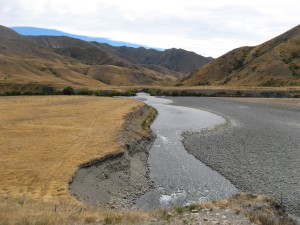 He said government had long signalled its disregard for rivers and its obsession with exploitation when it proposed lowering river quality standards from fit for swimming to fit for boating and wading. “After all you could boat in a sewage pond and, in waders, wade in a cesspool” he said.
Ken Sims said government intentions were simply short-sighted monetary greed. “What environmental legacy will future generations inherit?”
He said he was deeply disappointed that legislation to lower water standards came from present or recent past governments’ environment and conservation ministers, thereby demeaning their very own portfolios.
“In nature, there are neither rewards nor punishments; there are consequences”.
Robert Greene Ingersoll – 1881