

To answer questions about catch-and-release options, the following report was posted today in 2024.
Taupo trout – Harvest or Catch & Release?

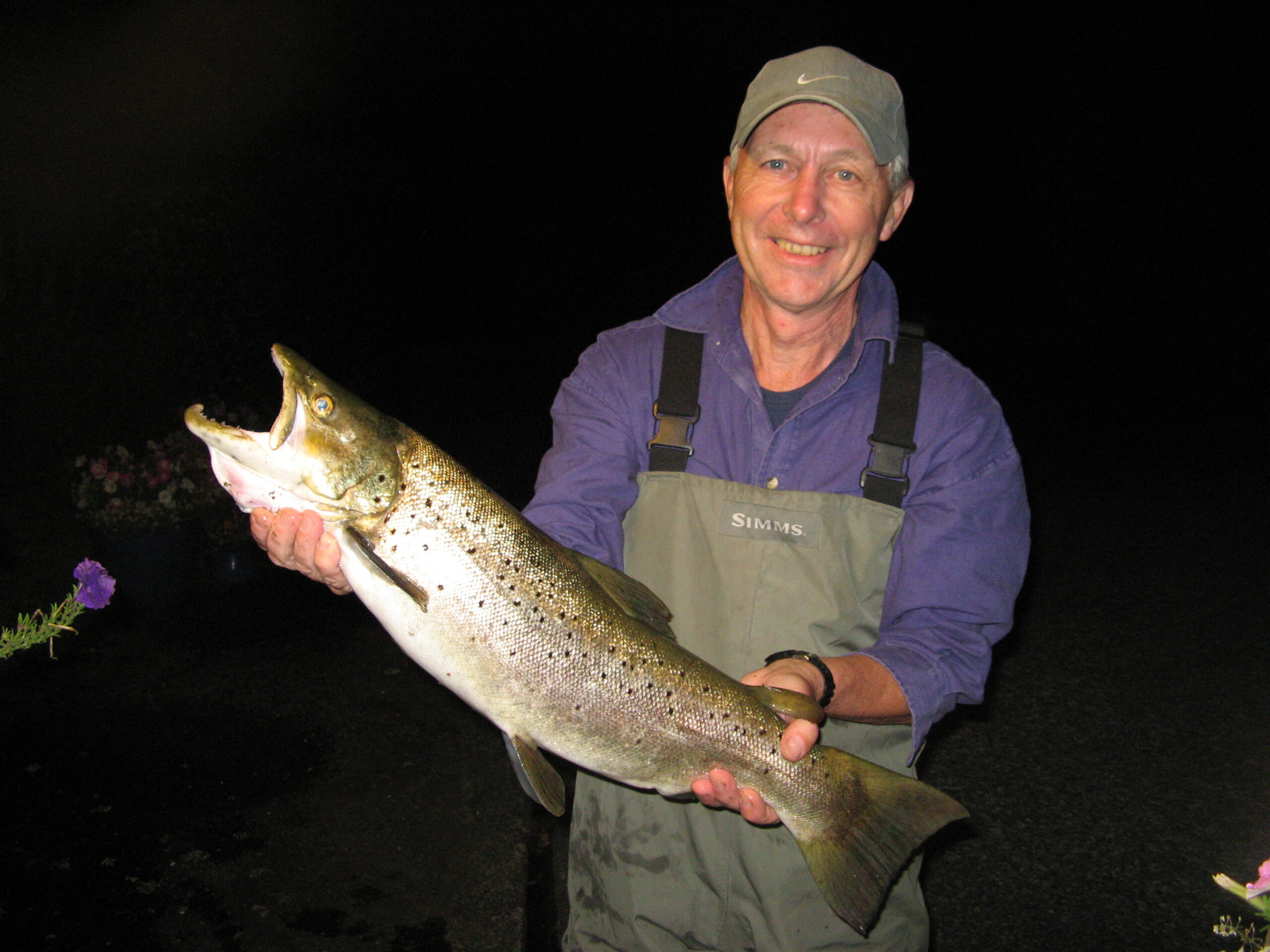
Tourist anglers are delighted when TRM encourage them to keep their catch and smoke it, as they are so used to catch-and-release fisheries elsewhere around the world. Some conservation-minded tourists imagine they are helping the fishery by releasing everything. They cannot believe we encourage them to keep their catch to improve the feed supply for the remainder. In most cases, by the time they measure the trout, weigh it, admire and take their photos, the trout is stuffed anyway.
SWMBO makes a special case to encourage them to bring their trout back by explaining how Taupo trout are the best-eating fish in the world. Trout are what they eat, so when they are raised in a lake with an ample diet of smelt (whitebait) and koura (freshwater lobsters), their flesh quality has to be superb, particularly compared to other wild trout surviving on mixed bugs and insect life, caddis and snails and anything else they can catch.
Following advice from DOC (the Department of Conservation are the Taupo Fishery Managers).
Taupō trout – harvest or catch-and-release?
Introduction
Find out why the catch-and-release approach is not the best default option for Taupō.
Date: 18 October 2018
New Zealanders have historically gathered wild food to support their families. There is a proud heritage of equality, where everyone has the freedom to hunt and fish in public spaces for wild animals introduced specifically for that purpose. However, this traditional approach is increasingly being questioned as contemporary trout anglers increasingly release all the fish they catch.
Data from Taupō angler surveys confirms that trout ‘catch-and-release’ is gaining popularity in the Taupo region. So, what is driving this change and which approach is best for the Taupō Fishery?

Catch and release
Catch-and-release is often considered an overseas import, introduced by fly-fishermen from Europe and the USA who have practised it for many years, usually to maintain stocking levels in high-pressure, premium fisheries. With New Zealand’s premium waterways also coming under increasing pressure, surely it makes sense to adopt a catch-and-release philosophy here? Sounds like a good idea, yet when we consider the experiences from other fisheries we can see things are not so clear cut.
For example, in British Columbia compulsory catch-and-release was implemented to protect lake fisheries close to the main urban centres from overharvest. The result was not what the managers intended. They noticed an increase in pressure on these lakes, driven by angler perception that more fish would be available. They discovered that even catch-and-release fisheries incur significant fish mortality especially if the angling pressure is too high.

Is ‘catch and release’ good for the Taupō fishery?
So, is catch-and-release a good option for the Taupō region? The short answer is no, but it’s important for anglers to understand why. Taupō benefits from a wealth of highly productive spawning streams, which generate very high numbers of juvenile trout. As the fish get older, they move into the lake and focus on a high-protein diet made mostly of smelt. This relationship between trout and smelt is key to the overall health of the fishery. The smelt population must be sufficiently large to accommodate the demands of hungry trout. If there are too many trout, the smelt population can dramatically decline, leaving trout struggling to find food. In this case, the result is a smaller, poorly conditioned trout. Therefore, it is essential to control trout numbers to promote a population of larger, healthy individuals. With few natural predators that role must be played by anglers.
Taupō fishery science statistics confirm that the harvest of trout has declined by approximately 50% over the past two decades – a situation driven by a decline in angler numbers combined with an increase in catch and release. The fishery management team has been trying to reverse this trend by introducing new regulations in 2017/18 to increase the number of trout removed from the system.

What if too many fish are harvested?
Some anglers may be concerned that too many fish could be removed, resulting in far fewer fish available to catch. This group might take comfort from the knowledge that harvest pressure is currently far less than during the 1980’s, when angler numbers were double those experienced today.
Angler pressure is a key part of the equation. If the fishery team saw a significant increase in anglers (evidenced through licence sales) and supporting data pointed towards an unsustainable level of harvest, then the bag and size limits would be reviewed.

Anglers are important
From a fishery management perspective, it is important for anglers to understand the key role they play – their actions directly impact the fishery. For example, the regulation changes introduced for the 2017/18 season will not work if all anglers adopt a catch-and-release approach. It’s down to anglers to act upon the regulations and in doing so, effect change in the trout population.
As anglers, we choose to harvest or release trout depending on a variety of factors – including ethical considerations (which have not been explored here). A common philosophy is to take good conditioned fish for the smoker and release others so they can recover. This is an understandable position, with a focus on quality food. Other anglers have responded to the revised regulations and harvested up to 6 legal-sized fish, including those that are recovering. Another group of anglers only support catch-and-release.
Catch-and-release does have a role to play in New Zealand. It works well when anglers seek to protect fragile fish stocks, especially in areas where they target larger solitary fish in backcountry headwaters with limited recruitment capacity. This approach simply is not the best default option for Taupō.
Ultimately, the Taupō Fishery Management Team is not looking to judge anglers for their choices; we focus on the overall health of the fishery and aim to encourage anglers to feel confident that harvesting trout from Lake Taupō is a good thing to do. Not only will you benefit from eating great-tasting trout, but you will also be contributing to the long-term sustainability of your fishery.


