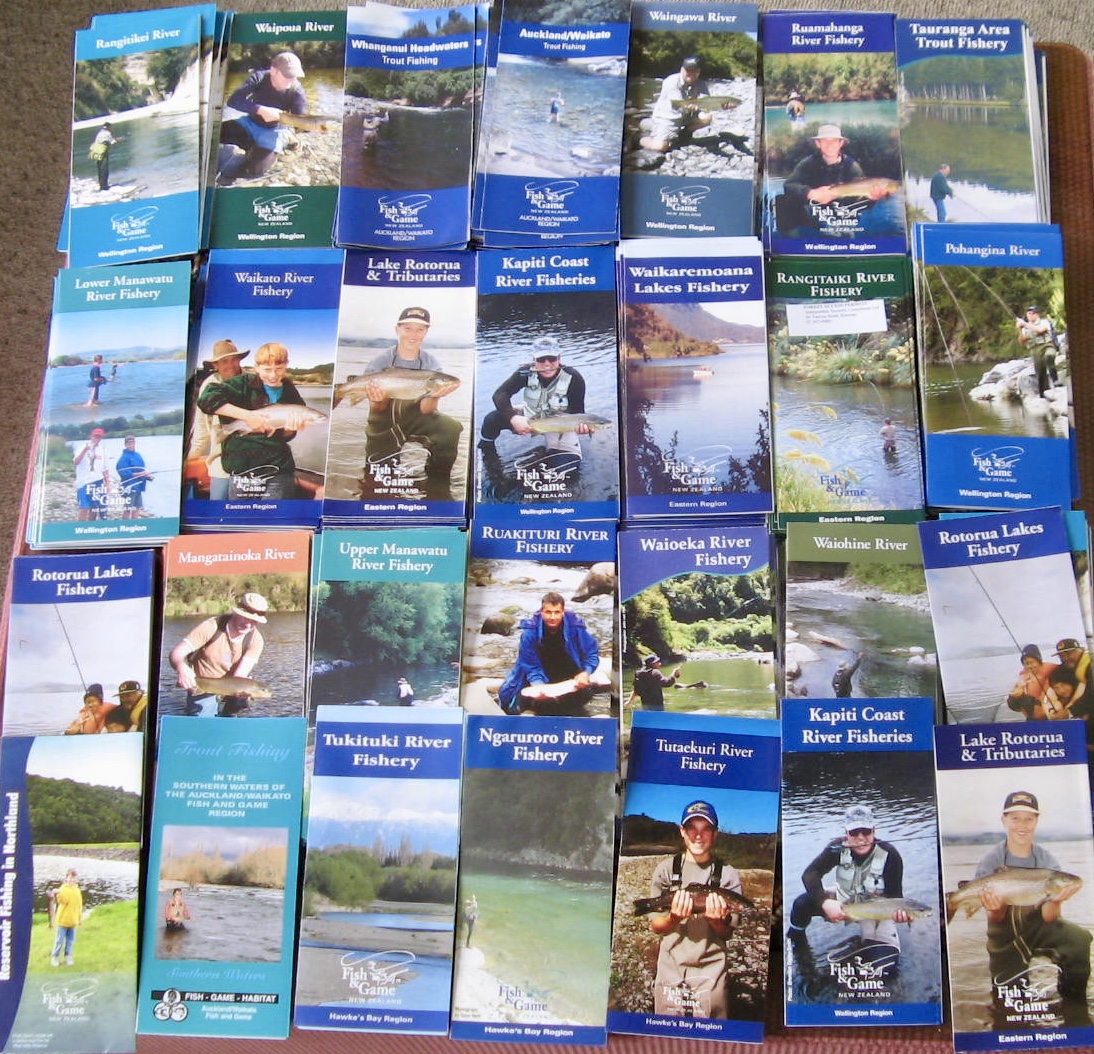
More info on trout farming by DOC – dated 2018 – will be of interest to Taupo anglers.
i.e. . Did you know – according to this study:

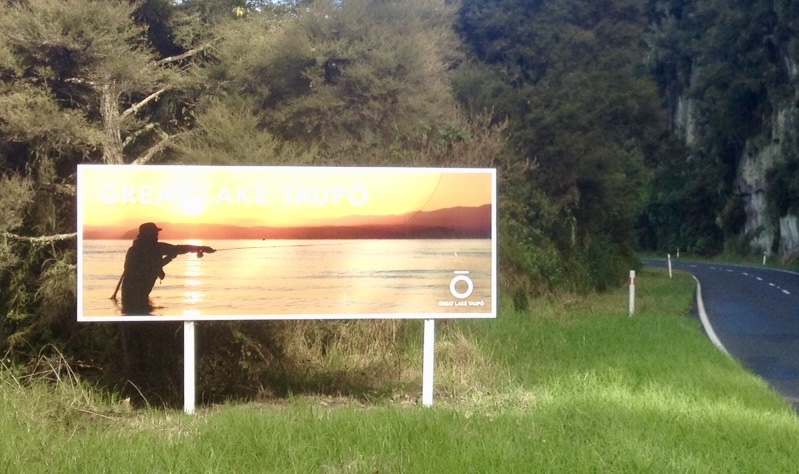
The Taupō fishery makes up about 28% of the nation-wide trout fishery. The Taupō fishery alone creates at least $29 million per year in business turnover, adds $11 million to the size of the economy, and sustains nearly 300 jobs. In Taupō fishery, about one trout is taken for each licence sold. This means that each fish legally taken is worth around $725 in business turnover and adds $275 to the domestic economy, and every 130 fish legally taken support one full-time job.
Section 1: General information
Purpose
The Department of Conservation is solely responsible for the analysis and advice set out in
this Regulatory Impact Statement, except as otherwise explicitly indicated. This analysis
and advice has been produced for the purpose of informing:
- policy decisions to be made by the Minister of Conservation and the Minister of
Customs, in consultation with Cabinet, on whether to continue the current restrictions on
the importation of trout meat for sale after 7 November 2018.
Key Limitations or Constraints on Analysis
This Regulatory Impact Statement has been prepared by Department of Conservation.
It provides an analysis of options to manage the importation of trout meat after the current
importation prohibition expires.
The analysis was based on the information available on the potential impacts of trout
importations. As importations have been largely prohibited for many decades, and the
situation in NZ is very different to that overseas, detailed evidence of potential impacts of
allowing importation is limited. It was therefore necessary to make predictions of likely
effects of changed approaches, based on statements made by other parties (e.g. WTO
members, trout fishery managers).
Given that both positive and negative effects of changes in the control of importation are
identified, the balance between those is not clear from the information currently available,
and some key interests have not been involved in the analysis to date (public consultation
has not been undertaken), the RIS concludes that allowing the CIPO to expire immediately
would be a high-risk option with no strong evidence of benefits to outweigh those risks. - Responsible Manager (signature and date):
Guy Kerrison
Policy Manager, Land and Freshwater Policy
Policy and Visitors Group
Department of Conservation
4 July 2018
DOC-5435270
Impact Summary: Regulatory Impact Statement: Importation of Trout Meat for Sale | 2- Section 2: Problem definition and objectives
2.1 What is the policy problem or opportunity?
Introduction to problem
- The importation of trout meat for sale has been prohibited1 since 1998 under a Customs
Import Prohibition Order (CIPO). If nothing is done, the existing CIPO will lapse and the
importation of trout will be unrestricted from 8 November 2018. - The question of whether to renew the CIPO brings together a number of distinct effects
and interests. - The sale of trout (except for wild trout) is allowed in New Zealand. The reason it is not
available for sale is because there is no way to obtain trout to sell – trout farming, selling
wild trout, and importing trout are all prevented by legislation or the CIPO. The reasons
for making trout unavailable for sale – and a key reason the farming of trout is not
permitted – relate to preservation of the wild trout fishery. - There is strong public interest in the New Zealand wild trout fishery, among the anglers
that utilise the fishery, and the businesses that support anglers in their use of the fishery.
The contribution of wild trout to the economy is significant. It is believed by trout fishery
managers and enforcement officials that importation and commercial sale of trout would
make poaching more difficult to control, and poaching would be likely to damage fisheries
in ways that would impact on the existing users and the trout-related economy. - The prohibition, combined with the legislative prohibitions on the sale of domestic trout
and the farming of trout (also aimed at protecting the wild trout fishery), means that
consumers are unable to buy trout meat and retailers and restaurants unable to sell trout. - There is a clear interest among businesses (including iwi groups) to look at farming trout
for sale, and a new industry would have the potential to provide employment, increase
the size of the economy, and provide valuable exports. However, officials are not aware
of any detailed business case that has been prepared that demonstrates whether or not
trout farming would be commercially viable in this country, nor what the potential scale of
possible farming or exports might be, or whether it would add to or displace other
potential aquaculture businesses. - There are concerns among trade officials about potential risks to international trade from
perceived barriers to trade. - This analysis expands on each of these areas of public interest and examines the links
between them, and considers the opportunities and risks that can be anticipated
depending on whether the CIPO is renewed or allowed to lapse. - The two groups with conflicting interests in this matter are:
- would-be purchasers of trout and trout products and businesses wanting to
support them; and - trout anglers and businesses supporting them.
- All of the benefits from the importation of trout for sale would go to members of the first
1 Except for quantities of less than 10kg that are not intended for sale. Larger amounts, and trout or trout
products intended for sale, can be imported only with the consent of the Minister of Conservation.
DOC-5435270
Impact Summary: Regulatory Impact Statement: Importation of Trout Meat for Sale | 3
group – members of public wanting to purchase trout, and those businesses providing for
that demand through retailing imported trout. The analysis notes that importation would
not allow a domestic farming industry to develop, as the prohibition on farming is in
legislation that has not been reviewed in the work on the CIPO. - All of the risks from the importation of trout for sale would be borne by members of the
second group – the fisheries managers (fish and game councils and the Crown),
recreational anglers and the businesses that support the recreational trout fishery. There
would be no benefits from the importation or sale of trout for this group of interests. - It is also noted that allowing importation without addressing the broader issues around
commercial sale of domestic trout would result in overseas trout producers being treated
differently to domestic potential producers, and might even impede development of a
domestic commercial trout industry.
Current legal situation - Trout (including rainbow and brown trout) are currently regarded as ‘non-commercial’
species in New Zealand – wild trout cannot be bought or sold, and trout cannot be farmed
commercially or imported for sale. Trout can be obtained only by persons who buy a
sports fish licence and catch their own fish in accordance with sports fishing regulations,
or who are given such fish by someone who has caught them. - These arrangements are historical (prohibitions on the sale of wild trout date back to the
1930s or earlier) and have changed over time, but have always been oriented towards
protecting the sustainability and values of the recreational trout fishery. The commercial
farming of trout has been prohibited since 1983. - The restrictions on the importation and commercial sale of trout and trout products are
implemented through:
- Part 5B of the Conservation Act 1987, in particular
o section 26ZQ, which prohibits the sale (including barter or offering for sale)
of wild trout caught in New Zealand, and
o section 26ZI(4), which bans the commercial farming of trout. - Section 301(a) of the Fisheries Act 1996, which does not allow the making of
regulations allowing licensing of fish farms for the rearing and breeding of trout for
sale. - A 22 November 2012 Gazette notice made under the Freshwater Fish Farming
Regulations 1983 lists those species that may be farmed and the list does not
include trout. - A Customs Import Prohibition (Trout) Order which prohibits the importation of trout
(alive or dead) and trout products, unless in quantities under 10 kilograms not
intended for sale, except with the consent of the Minister of Conservation and
subject to such conditions as may be imposed that are not inconsistent with the
import prohibition.
- Imports of trout meat and trout products (if agreed to by the Minister of Conservation) are
required to meet import health standards under the Biosecurity Act 1993 in the interest of
protecting the health of fish in New Zealand from pests and diseases. Three current
standards set out the biosecurity requirements for the import of all salmonid fish (which
include salmon, trout and char) – from Australia, the EEC, and other specified countries,
DOC-5435270
Impact Summary: Regulatory Impact Statement: Importation of Trout Meat for Sale | 4
respectively. These standards do not allow the import of trout still containing their
internal organs, and this prevents the importation of live trout. - The Customs Import Prohibition (Trout) Order 1998 (SR 1998/436), which placed an 18-
month ban on any commercial importation of trout or trout products, was the first to be
put in place under section 54 of the Customs and Excise Act 1996, and was intended to
allow time for Parliament to consider legislation on the issue. This action followed the
development of an import health standard which would have allowed the importation of
trout meat and trout products to begin. The 1998 Customs Import Prohibition Order
(CIPO) was renewed three times. It was then replaced by the Customs Import
Prohibition (Trout) Order 2001 (SR 2001/329). This CIPO was extended for another
three years in 2004. - Investigations by officials in 2007 found that alternative, less trade-distorting, options than
a CIPO for protecting the non-commercial status of trout would require additional
enforcement and fisheries management effort. The 2004 CIPO was replaced by another
in 2007, and by a further CIPO in 2010, which was extended for another three years in - This was replaced by the current CIPO in 2015.
- The Customs Import Prohibition Order (Trout) Order 2015 (LI 2015/241) prohibits the
importation of trout and trout products, except for quantities of less than 10 kilograms
which are not intended for sale. The Minister of Conservation has the discretion to grant
consent to the importation of trout intended for sale or in quantities greater than 10
kilograms, subject to conditions that are not inconsistent with the prohibition. - A Private Members Bill, the Conservation (Protection of Trout as a Non-commercial
Species) Amendment Bill was introduced in 1998 and adopted as a Government Bill in - The Bill would have made it an offence to buy, sell or possess any trout for the
purpose of sale regardless of its origin. The Bill never progressed beyond the Committee
Stage and was discharged in 2008. During this period the CIPO was maintained. - The Customs Import Prohibition (Trout) Order 2015 expires at the close of 7 November
- In the absence of further legislative action, trout meat in any form that complies
with the import health standards could be imported to New Zealand for commercial sale
after 7 November 2018.
Wild trout fishery - The import prohibition and the prohibition on the farming of trout are aimed at protecting
the New Zealand wild trout fishery. Allowing the importation of trout for sale could
increase the incentives for some people to illegally sell wild trout for financial gain.
Important parts of the wild trout fishery are under pressure from current harvesting levels,
and any major increase in take or decrease in breeding success (such as from increased
angler harvest or poaching impacts) may adversely impact on the fishery and could lower
its recreational and economic values. - Current trout fishery enforcement with regard to the attempted illegal sale of wild trout is
straightforward and low cost. Enforcement currently requires only about 9% of sports
fishery management budgets. Members of the public that have an interest in the trout
fishery and who observe any trout being offered for sale quickly report alleged offences to
enforcement officials. This currently limits the potential for people to sell wild trout
illegally on a large scale. - If imported trout could be sold, the illegal sale of wild trout would be much more difficult
and costly to detect. For example, if a retailer or restaurant was suspected of acquiring
DOC-5435270
Impact Summary: Regulatory Impact Statement: Importation of Trout Meat for Sale | 5
wild trout, enforcement officials would need to inspect documentation to check whether
the trout found on the premises was legally acquired. (This work would probably be
carried out by MPI as part of its existing fish retailing compliance regime, which is cost-
recovered.) However, potential funding for increased compliance for the wild trout fishery
would need to be explored and might need to include increases to sports fish licence
fees, additional cost recovery from trout importers, Crown funding, or some combination
of these. - While the actual scale of any increase in poaching as a result of allowing trout for sale
cannot be known, it is possible that trout could be illegally taken in financially valuable
amounts. Department of Conservation (DOC) enforcement officials have observed
groups of two to four people easily catching 30–80 trout (worth around $600 to $1600 at
current wholesale prices in Australia) in less than an hour by sweeping a spawning
stream with a gill net. Fish taken in this way can currently provide a cheap source of food
but cannot readily be sold for financial gain. - The wild trout fishery is mostly self-supporting, which greatly reduces the cost of
sustaining the fishery. Nearly all fish are bred naturally in the wild; hatchery-raised fish
released into the wild make up less than 5% of the fishery. The most vulnerable parts of
the fishery are those where trout aggregate in large numbers (generally for spawning) in
places within easy reach of motor vehicles or quad bikes. In these areas, large numbers
of fish could be netted and readily taken away for illegal sale. If there is a frequent loss of
large numbers of spawning fish and the destruction of eggs in spawning gravels by
trampling it could be expected to lead to a significant decline in the parts of the wild trout
fishery that depend on those spawning areas. DOC considers the Taupo and Rotorua
Lakes trout fisheries to be the most vulnerable to the impacts of potential large-scale
illegal netting of fish.
Economic and recreational value of wild trout- The New Zealand wild trout fishery is renowned internationally and attracts significant
numbers of overseas tourists to New Zealand. Freshwater sports fishing licence sales
nationally amount to $11.1 million per year (145,000 licences sold), and far greater
amounts are spent on outdoor equipment (including fishing gear, boats and vehicles),
travel, accommodation, and other services associated with the recreational fishery. - The Taupō fishery makes up about 28% of the nation-wide trout fishery. The Taupō
fishery alone creates at least $29 million per year in business turnover, adds $11 million
to the size of the economy, and sustains nearly 300 jobs. In Taupō fishery, about one
trout is taken for each licence sold. This means that each fish legally taken is worth
around $725 in business turnover and adds $275 to the domestic economy, and every
130 fish legally taken support one full-time job. - Any major increase in illegal harvesting of trout spawning aggregations, particularly in the
Taupō fishery, may therefore reduce the size of the fishery and result in potentially
significant economic and employment impacts on the Taupō economy.
Comparison with other wild fisheries - While it would be desirable to seek to quantify the risk of poaching impacts based on
experience in other fisheries or in other countries, direct comparisons are problematic.
Whitebait, for example, is imported and sold commercially, and the wild resource is not
2 Section 3B.2.5 Review of the Taupō Sports Fishery 2013.
DOC-5435270
Impact Summary: Regulatory Impact Statement: Importation of Trout Meat for Sale | 6
adversely affected by this. However, there is no “quick and easy” way to catch very large
amounts of whitebait contrary to the regulations without being detected. - The sale of salmon in New Zealand has not led to significant salmon poaching. Salmon
in edible condition can be caught in large numbers only in half a dozen South Island
rivers in areas where the illegal use of nets is easily seen. Elsewhere, salmon running up
rivers are too few and far between to catch in numbers even with nets. In all regions, the
flesh of salmon typically begins to decompose and becomes inedible before the fish join
spawning aggregations. This greatly reduces the opportunity to illegally net aggregations
of edible salmon. In contrast, edible trout can readily be caught with nets in visually
concealed spawning streams where detection is difficult. - Other countries have both trout sales and wild trout fishing. However, these wild fisheries
have significant differences to the New Zealand trout fishery. For example, in situations
where trout fisheries are contained entirely within large private estates overseen by
gamekeepers, public access to the fisheries is prevented and opportunities for poaching
are restricted. Some other fisheries are sustained largely by artificial stocking and the
impact of losing spawning fish in these fisheries can be insignificant on their
sustainability. In other overseas fisheries, wild trout are small and relatively few, and
opportunities for netting large numbers of fish can be limited. These differences make
direct comparison of New Zealand and overseas situations problematic.
Importation and sale of trout - There is some interest from food importers to be allowed to import trout meat for sale,
apparently in response to an unmet demand among the general public. While the extent
of public demand for trout is unknown, the Minister of Conservation occasionally receives
applications from interests wishing to import trout. There have been 3 applications in the
last 8 years. However, informal feedback from industry groups suggest the lack of import
applications is not because of a lack of interest but, rather, there is considered to be no
utility in applying to import trout. To date, only one application has been approved and
there were unique circumstances in that case. Discontinuing the import prohibition order
would allow food importers to import trout and thereby meet apparent consumer demand
for trout. - At least one major company in the aquaculture industry has said it has a strong interest in
being able to begin to farm trout (see below) and Aquaculture New Zealand has indicated
it supports enabling the farming of trout. Some Māori have also indicated an interest in
trout aquaculture. This implies that demand exists for commercial access to trout, though
it remains to be tested how big that demand is and how much of that demand would be
domestic and how much in export markets. - Allowing the CIPO to lapse may align with government priorities to maximise
opportunities for economic development and minimise regulatory burden.
International Trade Obligations - The current import prohibition has been a minor source of friction with some of New
Zealand’s trading partners. In the past, Australia, Canada, the EU, US, and Norway have
raised concerns about the consistency of the import prohibition for trout with New
Zealand’s obligations under the World Trade Organisation (WTO), including during New
Zealand’s 2003 Trade Policy Review.3 They have also raised the issue directly with
3 There were no questions asked of New Zealand during the 2009 Review.
DOC-5435270
Impact Summary: Regulatory Impact Statement: Importation of Trout Meat for Sale | 7
Ministers in New Zealand in the past. Specifically, there are concerns that the import
prohibition is inconsistent with Article III:4 (national treatment)4 of the General Agreement
on Trade and Tariffs (GATT) and Article XI of the GATT (which prohibits prohibitions and
restrictions of imports). Allowing the prohibition to lapse would address their concerns,
and remove the possibility that they would take dispute settlement action to pursue their
interests. - It is also important to consider current and future negotiations when reviewing the CIPO.
The CIPO has been raised in passing in past negotiations. And, while we think it unlikely,
we cannot discount the possibility that it may become an issue once again.
Trout farming - There is increasing interest within the New Zealand farming and aquaculture sector –
including among Māori interests – to be able to farm trout in New Zealand, both for export
and to meet domestic demand. A recent Bay of Plenty regional growth study5 highlighted
possible future economic opportunities if the farming of trout was permitted. While the
issue of domestic trout farming is outside the scope of the trout CIPO (and lifting the trout
CIPO would not enable trout farming or the commercial sale of New Zealand wild trout),
allowing the importation of trout for sale would be likely to trigger calls to remove the
prohibitions on trout farming in the Conservation Act and Fisheries Act. - The global export market for trout products (live, fresh/chilled and frozen) in 2010 was
valued at US$985 million and grew at an annual average rate of 8.6% over the 2000–
2010 period. The major trout exporting countries are Chile and Norway, while Australia
farms trout primarily for domestic consumption. - While the potential value of a trout farming industry to New Zealand, including the ability
of New Zealand to compete in international markets, is unclear, a report for the sector on
the viability of commercialisation of new fish species in New Zealand ranks the farming of
ocean trout as a top priority for more detailed research and analysis. Salmon farming in
New Zealand provides a greenweight harvest of around 14,000 tonnes annually and
generates around $128 million in revenue. About half of production is exported. - Trout have an established market overseas and could be commercially farmed using
existing technology (in contrast to other fin fish, other than salmon, where technology to
allow for commercial farming is at its early stages). However, issues relating to disease,
genetic risks to wild trout and predation risks to some native fish populations would need
to be considered before the prohibition on trout farming was lifted. Similar issues were
considered prior to allowing salmon farming in New Zealand.
4 The import prohibition will be inconsistent with the national treatment obligation if trout from overseas markets is given less favourable treatment than ‘like’ products of domestic origin. For instance, if salmon were found to be ‘like’ trout for WTO purposes, then there would be a breach of Article III, since there is differential treatment in the New Zealand market.
5 Toi Moana Bay of Plenty Regional Growth Study. An independent report commissioned by the Ministry of Business, Innovation and Employment (MBIE) and the Ministry for Primary Industries (MPI), in conjunction with the region, released in May 2015.
Impact Summary: Regulatory Impact Statement: Importation of Trout Meat for Sale | 8 - Objectives
- The Government’s objectives in regard to the issues examined in this paper can be
summarised as follows:
- Maximise recreational and tourism values of wild trout fishery
- Maximise employment and economic values of wild trout fishery
- Maximise economic growth and employment opportunities in the wider economy
- Provide for maximum consumer choice in purchasing decisions
- Minimise risk of friction in negotiations with trading partners.
- The interactions between these issues mean that it is not always possible to progress all
of these objectives simultaneously. Actions that could advance some of the objectives
may restrict progress on other objectives. Decisions on which objectives should be given
precedence therefore need to be made by elected Ministers. This paper therefore sets
out the practical options and likely impacts with the aim of assisting Ministers in making
their decision on which option to adopt.
DOC-5435270
Impact Summary: Regulatory Impact Statement: Importation of Trout Meat for Sale | 9 - 2.2 Who is affected and how?
Summary of issues and interest groups - The question of whether to renew the Customs Import Prohibition (Trout) Order 2015 or
allow it to lapse is one that one that places two groups of interests at odds with each
other:
(A) would-be purchasers of trout and trout products and businesses wanting to
support them; and
(B) trout anglers and businesses supporting them. - A summary of the sets of interests is given in the table below.
Group A – Trout purchasers and businesses supporting them
Group B – Trout anglers and businesses supporting them
- Derive no benefit from the wild trout fishery
- Would receive all the benefits from the importation of trout for sale
- Would experience no risks from the importation of trout for sale
- Would experience no costs from the importation of trout for sale (only minor cost-recovery)
- Businesses would expect to gain a financial benefit from the importation of trout for sale
- Derive all the benefits from the wild trout fishery
- Would receive no benefits from the importation of trout for sale
- Would carry all the risks from the importation of trout for sale
- Anglers would carry all the potential costs of increased enforcement effort required if trout imported for sale
- Businesses will experience a financial cost if the wild trout fishery declines
Conclusion- Nothing to lose from sale of trout
- Everything to gain from sale of trout
Conclusion - Nothing to gain from sale of trout
- Potentially much to lose from sale
- A decision on the importation of trout therefore requires a decision about how to balance
these two conflicting sets of interests.
2.3 Are there any constraints on the scope for decision making?
No additional constraints other than those described elsewhere. The key constraint is that
the risks, costs and benefits of the different options cannot be fully quantified.
DOC-5435270
Impact Summary: Regulatory Impact Statement: Importation of Trout Meat for Sale | 10
Section 3: Options identification
3.1 What options have been considered?
Options and impact analysis - Three practical options have been identified by officials:
- Renew the CIPO for a further three years without initiating any major additional
analysis. - Renew the CIPO for a further three years in order to permit a public review of the
prohibition on the importation of trout, and potentially of related issues around
domestic farming and sale of wild trout. - Take no action, which would allow the Customs Import Prohibition (Trout) Order 2015
to expire at the close of 7 November 2018.
Option 1 – extend CIPO only